English
 Español
 Português
This advanced three-layer structure integrates the barrier and reflective properties of aluminum foi...
See Details
Industry News
Home / News / Industry News / How Does AL/PET/EMAA Triplex Tape Improve Cable Shielding and Moisture Protection?
How Does AL/PET/EMAA Triplex Tape Improve Cable Shielding and Moisture Protection?
Date:Jul 14, 2026
What Is AL/PET/EMAA Triplex Tape in Cable Construction?
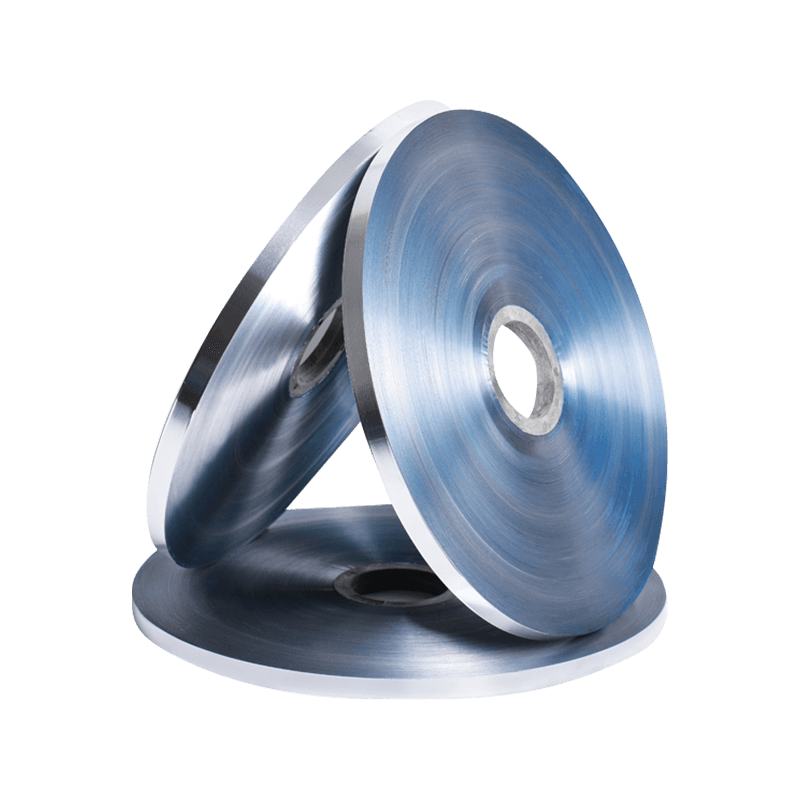
AL/PET/EMAA triplex tape is a three-layer laminate combining aluminum foil (AL), polyethylene terephthalate (PET), and ethylene methacrylic acid copolymer (EMAA), engineered specifically as a shielding and moisture-barrier tape for wire and cable construction. Each layer plays a distinct functional role: the PET layer provides mechanical strength and dimensional stability during high-speed cabling lines, the aluminum layer delivers electromagnetic shielding and a continuous moisture barrier along the cable core, and the EMAA layer serves as the bonding layer that fuses the tape to the cable's inner jacket or outer sheath during extrusion.
It is applied longitudinally around a cable core on cabling lines and becomes a permanent structural component of the finished cable, bonded directly into the jacket wall rather than serving as a removable outer wrap.
Electromagnetic Shielding and Moisture Barrier Performance
The aluminum foil layer is the primary source of both EMI/RFI shielding and moisture-blocking performance in cable constructions. When wrapped longitudinally around a cable core, the aluminum layer provides continuous shielding against electromagnetic interference while also acting as a radial moisture barrier that prevents water ingress along the cable's length, a critical requirement for underground and outdoor-rated cables. At typical thicknesses of 9 to 12 microns, the aluminum layer maintains consistent shielding effectiveness and near-zero water vapor transmission even after being formed around the cable core and subjected to cabling line tension.
Why Continuous Coverage Matters More Than Conductivity Alone
Unlike braided copper shields, which leave small gaps in coverage at the weave intersections, a longitudinally applied foil tape provides 100% coverage around the cable core. For applications where blocking electromagnetic interference across the full frequency range matters more than maximum conductivity, this continuous coverage often outperforms braid shielding despite aluminum's lower conductivity relative to copper.
Mechanical Durability Through the Cabling Process
The PET outer layer contributes the tensile strength and puncture resistance needed for the tape to survive taping, corrugation, and extrusion coating operations without tearing or delaminating. Cable manufacturing lines run at high speed and subject the tape to bending, longitudinal folding, and overlap sealing, so PET's dimensional stability under heat and resistance to cracking are essential, particularly during jacket extrusion, where the tape is exposed to elevated temperatures as the outer sheath is applied over it.
- Tape that lacks sufficient tensile strength can tear at the taping head during high-speed application, creating shielding discontinuities that are difficult to detect until later testing.
- PET's heat resistance prevents the tape from softening or distorting during jacket extrusion, which would otherwise disturb the aluminum layer's uniform coverage around the core.
Reliable Bonding to Cable Jacketing Materials
EMAA is selected as the bonding layer because of properties that standard polyethylene sealants cannot match in a cable context. EMAA forms a strong, continuous bond to the inner surface of polyethylene (PE) or polyvinyl chloride (PVC) cable jackets at relatively low processing temperatures, helping maintain a stable bond line during jacket extrusion without requiring excessive heat exposure to the cable core. This adhesion also extends to the aluminum foil itself, allowing the tape to remain fully adhered to the cable structure throughout its service life, even under repeated flexing, thermal cycling, and installation bending.
EMAA-bonded tape is also less prone to bond failure caused by residual processing oils or compounding additives that can migrate to the jacket surface, a common issue in cable manufacturing where jacket compounds contain plasticizers, flame retardants, or lubricants that can interfere with adhesion of standard PE-based bonding layers.
Typical Specifications for Cable-Grade AL/PET/EMAA Tape
| Parameter | Typical Value / Range |
| Total thickness | 60 – 120 µm |
| PET layer thickness | 12 – 23 µm |
| AL layer thickness | 9 – 12 µm |
| EMAA layer thickness | 30 – 80 µm |
| Water vapor transmission rate (WVTR) | <0.1 g/m²/day |
| Bonding initiation temperature (EMAA) | 80 – 120 °C |
| Tensile strength (MD/TD) | 100 – 200 MPa |
Primary Applications in Cable Manufacturing
AL/PET/EMAA triplex tape is used across several cable types where shielding and moisture resistance are both required, each with slightly different performance priorities.
Power Cables
This tape is widely used as a longitudinal shielding and moisture-barrier layer in low- and medium-voltage power cables, particularly those intended for direct burial or wet-location installation. The aluminum layer blocks radial water penetration along the cable core, protecting conductor insulation from moisture-related degradation, while the EMAA layer bonds the tape firmly to the surrounding PE or PVC jacket during extrusion.
Telecommunication and Data Cables
In telecom cables, including copper twisted-pair and coaxial constructions, this tape serves as an EMI shield that reduces signal interference between adjacent conductors or from external electromagnetic sources, while simultaneously acting as a moisture barrier that protects signal-carrying conductors from water ingress at splice points and cable ends.
Fiber Optic Cables
For loose-tube and central-tube fiber optic cable designs, this tape is used as a water-blocking layer around the cable core, preventing moisture migration along the cable length that could otherwise affect fiber attenuation over time, particularly in outdoor and underground installations.
Instrumentation and Control Cables
Cables used in industrial control and instrumentation applications use this tape both for EMI shielding, protecting low-voltage signal integrity from nearby power circuits, and for moisture resistance in harsh plant or outdoor environments.
Advantages Over Alternative Cable Shielding Tapes
- Compared to AL/PE tapes, EMAA provides stronger, more temperature-tolerant bonding to jacket compounds and better resistance to bond failure in the presence of plasticizers or processing residues common in cable jacket formulations.
- Compared to metallized PET shielding tapes, the solid aluminum foil layer delivers substantially better shielding effectiveness and moisture-barrier performance, since vacuum-metallized PET is prone to microcracking and shielding degradation when bent or corrugated around the cable core during forming.
- Compared to copper tape or braid shielding, this tape offers a lighter-weight, lower-cost shielding solution for applications that do not require copper's higher conductivity, while still providing continuous 100% coverage that braided shields cannot match.
Processing Considerations for Cable Manufacturers
AL/PET/EMAA tape is compatible with standard cabling line taping heads and is applied longitudinally with an overlap seam, followed by jacket extrusion that bonds the EMAA layer to the inner surface of the sheath under heat and pressure from the extrusion process itself. When specifying this tape for a new cable design, key parameters to confirm with the supplier include the EMAA bonding temperature relative to the jacket extrusion line's processing temperature, the tape's minimum bend radius before aluminum microcracking occurs, and overlap width requirements needed to maintain continuous shielding coverage around cables of varying diameter.
Because the aluminum layer is susceptible to microcracking if bent too tightly during taping and corrugation, cable manufacturers should confirm the tape's tested minimum forming radius against their specific cable core diameter before committing to a production run, since a mismatch here can result in shielding discontinuities that only become apparent during later shielding-effectiveness testing.
Content
- 1 What Is AL/PET/EMAA Triplex Tape in Cable Construction?
- 2 Electromagnetic Shielding and Moisture Barrier Performance
- 3 Mechanical Durability Through the Cabling Process
- 4 Reliable Bonding to Cable Jacketing Materials
- 5 Typical Specifications for Cable-Grade AL/PET/EMAA Tape
- 6 Primary Applications in Cable Manufacturing
- 7 Advantages Over Alternative Cable Shielding Tapes
- 8 Processing Considerations for Cable Manufacturers
Recommended Articles
Related products
-

-
DINGHE AL/PET/VMPET Triplex Film is a high-barrier, multi-functional laminate designed for demanding...
See Details -
AL Scrim-Reinforced PET Triplex Film is industrial laminate composed of Aluminum Foil (AL), Reinforc...
See Details -
PET/AL/PET Triplex Film is multilayer laminate composed of Polyester (PET) / Aluminum Foil (AL) / Po...
See Details -
AL/PET/AL triplex film with a symmetric three-layer structure—featuring two aluminum foil (AL) layer...
See Details -
PET/AL/PE Triplex Film is a high-performance composite packaging material engineered with a three-la...
See Details