English
 Español
 Português

AL/PE Woven Fabric is a high-performance composite material made by laminating premium aluminum foil...
See Details
Industry News
Home / News / Industry News / How Do UL 181 Fire-Retardant Standards Change the Way You Source Aluminum Laminated Film for Flexible Ducts?
How Do UL 181 Fire-Retardant Standards Change the Way You Source Aluminum Laminated Film for Flexible Ducts?
Date:Oct 21, 2026
Fire Codes for Ventilation Ducts Are Getting Stricter on Both Sides of the Atlantic
Over the last few years, building authorities in North America and Europe have paid noticeably more attention to what ventilation ducts are made of. A duct runs through ceilings, shafts and plant rooms, so in a fire it can carry flame and smoke from one compartment to the next. That is why public buildings, hospitals, schools and apartment blocks now ask more questions about the materials inside the duct wall, and why the answers have to be documented.
Three references come up again and again in specifications. UL 181 sets requirements for factory-made air ducts and connectors, and it is the document North American inspectors expect to see behind flexible duct. ASTM E84 measures surface burning, meaning how fast flame spreads across a material and how much smoke it produces. In Europe, EN 13501-1 sorts building products into reaction-to-fire classes that project engineers read straight off the data sheet.
The standards differ in method, but they push in the same direction. A buyer who once treated flame performance as a bonus now treats it as a condition of the purchase order, and the consequences of missing it are concrete. A rejected delivery, a duct line that has to be torn out after inspection, or a complaint that reaches the main contractor can wipe out the margin on an entire project. For anyone sourcing UL certified aluminum film or any other HVAC duct raw material, the question has moved from "is it cheap" to "can it be proven".
One detail is often misunderstood, so it is worth stating plainly. Listing under UL 181 applies to the finished duct, not to a roll of film on its own. What the film does is determine whether the duct maker has a fair chance of passing. A laminate that burns clean, stays bonded and keeps its strength gives the manufacturer room to succeed. A weak laminate makes every test a gamble.
Three Weaknesses We See in Low-Cost Composite Films
Budget laminates look similar to good ones on a quotation sheet. Both are described as aluminum foil bonded to polyester, and both come in similar widths. The differences appear later, usually after the duct has been installed and has started to work under real conditions. Our technical team keeps running into the same three problems.
- Delamination under heat and air pressure. When the adhesive is not built for warm air moving at speed, the layers slowly let go of each other. The foil lifts, flutters and eventually separates, and the duct loses both its appearance and its airtightness.
- Low tensile and tear strength. A thin or poorly bonded film can pass a quick check on the bench and still split at a bend, a clamp or a hanger once installers start handling it.
- Dense, toxic smoke in a fire. Some inexpensive adhesive and film combinations burn dirty. They may not spread flame quickly, but they release thick smoke that makes escape harder, which is the very hazard the flame and smoke standards were written to limit.
None of these defects appear on a price list, and that is exactly why they are expensive. They show up as site complaints, replacement shipments and customers who quietly stop reordering. By the time the cause is traced back to the film, the original saving on price per square metre is long gone.
Inside the Factory: Adhesive Chemistry and Micron-Level Lamination
We have been laminating aluminum materials for about 25 years, and in that time one lesson has stayed constant: fire performance is decided mostly by the adhesive, not by the foil. Aluminum on its own does not burn, but the layers that hold it to a polyester carrier do, and how they behave when a flame arrives depends on their chemistry. For that reason we developed our own heat-resistant, flame-retardant polymer adhesive instead of buying a generic glue and adjusting around it.
The adhesive joins pure aluminum foil to flame-retardant polyester film (PET) in a micron-level lamination process. Coating weight, drying and tension are controlled closely, because a bond that is slightly uneven across the width of the roll becomes a weak line in the finished duct. When the process is right, the result is a fireproof foil laminate that stops burning once the flame source is removed and holds a high peel strength even after heat and flexing.
Duct makers usually choose between two constructions. A symmetric structure with a PET core between two aluminum layers suits ducts that need reflectivity and barrier on both sides, while a single foil layer on PET is a lighter option where one face does most of the work.
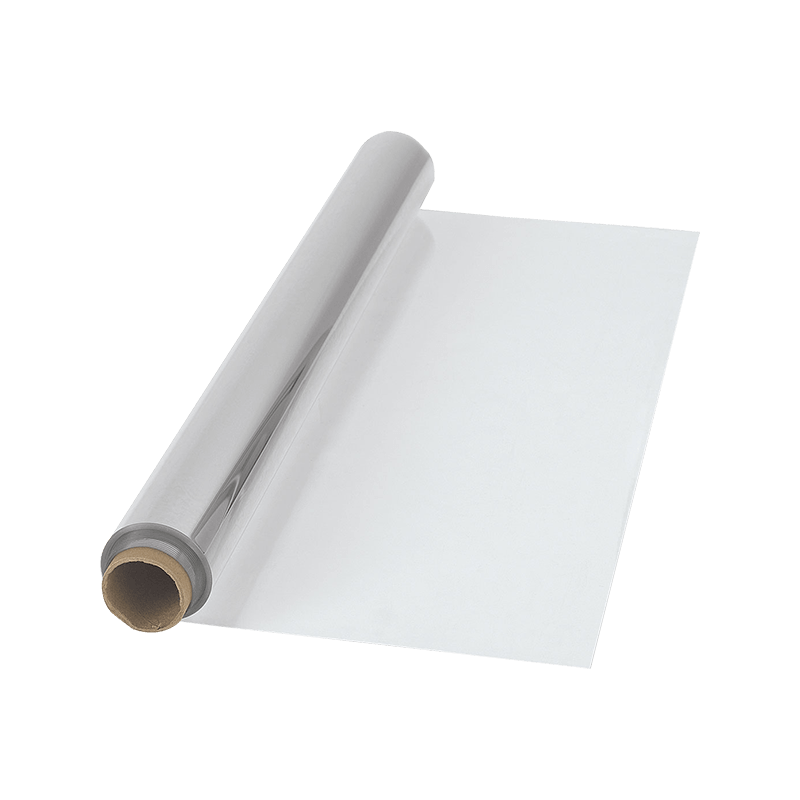 AL/PET/AL Triplex Film for Flexible Duct and Cable UseA symmetric three-layer laminate with a PET core between two aluminum foil layers, suited to flexible ducting and cable wrapping.View Product →
The thinner single-foil route is covered by our AL/PET range, which combines the barrier of aluminum with the strength and dimensional stability of polyester.
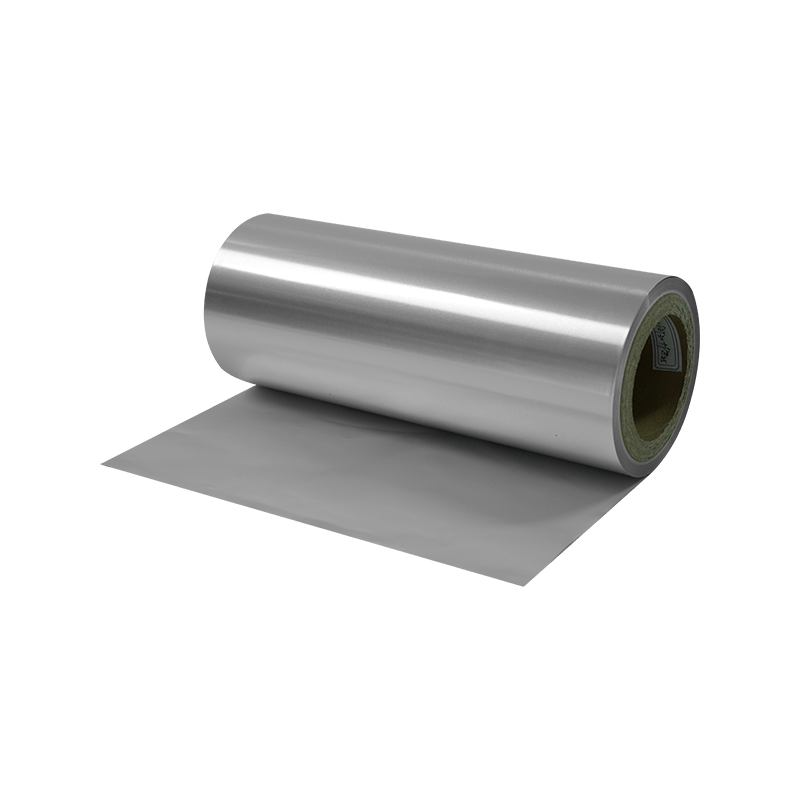 AL/PET Laminate Film for Duct and Insulation ApplicationsAluminum foil bonded to PET for moisture, oxygen and light barrier, with strong mechanical strength and dimensional stability.View Product →
Custom Structures and Batch-Level Flame Testing
No two duct lines are quite the same. One maker runs a heavy-duty acoustic duct, another a lightweight residential product, and each needs a different balance of thickness, stiffness and reflectivity. We therefore build the laminate to the customer's drawing instead of asking the customer to adapt to a fixed catalogue. Total thickness can be set across a range from roughly 0.02 mm to 0.12 mm, and structures such as Alu+PET+Alu or Alu+PET can be matched to the application.
| Option | Typical choice | What it changes in the duct |
| Structure | Alu+PET+Alu or Alu+PET | Reflectivity, barrier on one or both faces, stiffness |
| Thickness | About 0.02 mm to 0.12 mm | Weight, tear resistance, forming behaviour |
| Adhesive system | Heat-resistant, flame-retardant polymer | Peel strength and burning behaviour |
| Quality check | Factory flame-retardant spot test per batch | Consistency between shipments |
Testing follows the same logic. Every production batch is sampled and checked for flame retardancy before it leaves the factory, so the film in the third container behaves like the film in the first. For a duct manufacturer preparing a UL 181 submission, that kind of batch-to-batch evidence matters more than a single certificate attached to a single sample.
Reinforcement is another option for customers who need extra tear resistance, for example in larger ducts or in products that will be pulled tight during installation. A fiberglass scrim layer inside the laminate spreads load across the web and keeps a small nick from turning into a long tear.
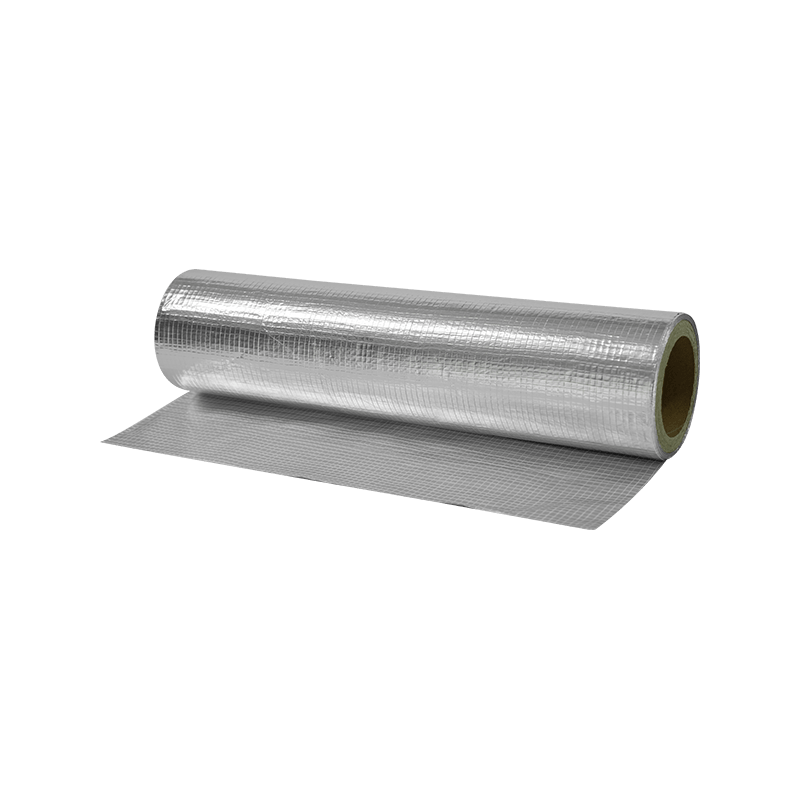 AL/Scrim/PET Triplex Film for Reinforced Insulation FacingAluminum foil, fiberglass scrim and PET combined for reflectivity, tensile strength and tear resistance in insulation and hose jackets.View Product →
What the Tightening Rules Mean for Global Buyers
Fire requirements for ventilation systems are not likely to loosen, and each new project tends to add questions rather than remove them. Buyers who handle this well share a habit: they treat flame performance, bond strength and traceability as selection criteria from the first conversation, not as items to chase after the order is placed.
In practice that means asking suppliers whether the adhesive is their own, whether flame tests are run on the actual production batch, and whether thickness and structure can be adjusted without a long redesign. A factory that controls the adhesive, the lamination and the slitting under one roof can answer those questions directly, and it can trace a problem back to its cause when one appears.
If you are preparing a duct product for a market that applies UL 181, ASTM E84 or EN 13501-1, send us your target standard, your drawing and the structure you currently use. We will tell you plainly whether our laminate fits your line, and what we would change if it does not.
Content
- 1 Fire Codes for Ventilation Ducts Are Getting Stricter on Both Sides of the Atlantic
- 2 Three Weaknesses We See in Low-Cost Composite Films
- 3 Inside the Factory: Adhesive Chemistry and Micron-Level Lamination
- 4 Custom Structures and Batch-Level Flame Testing
- 5 What the Tightening Rules Mean for Global Buyers
Recommended Articles
Related products
-
-
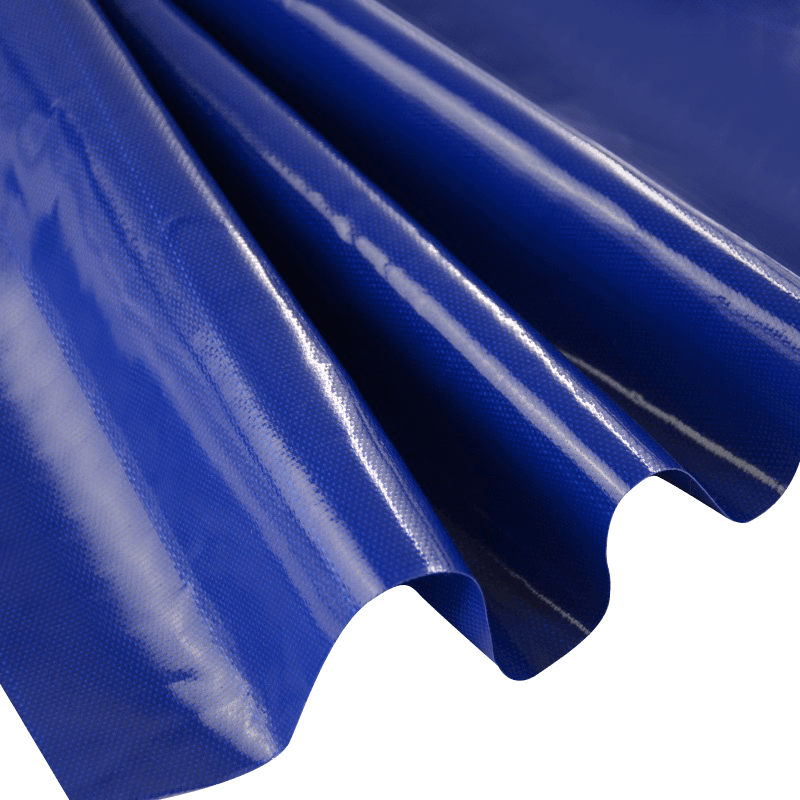
Reinforced PVC Mesh Fabric Film is a composite material made by laminating PVC film with a high-stre...
See Details -

PVC film is a widely used film with softness, UV property, fire resistance and so on properties.This...
See Details -
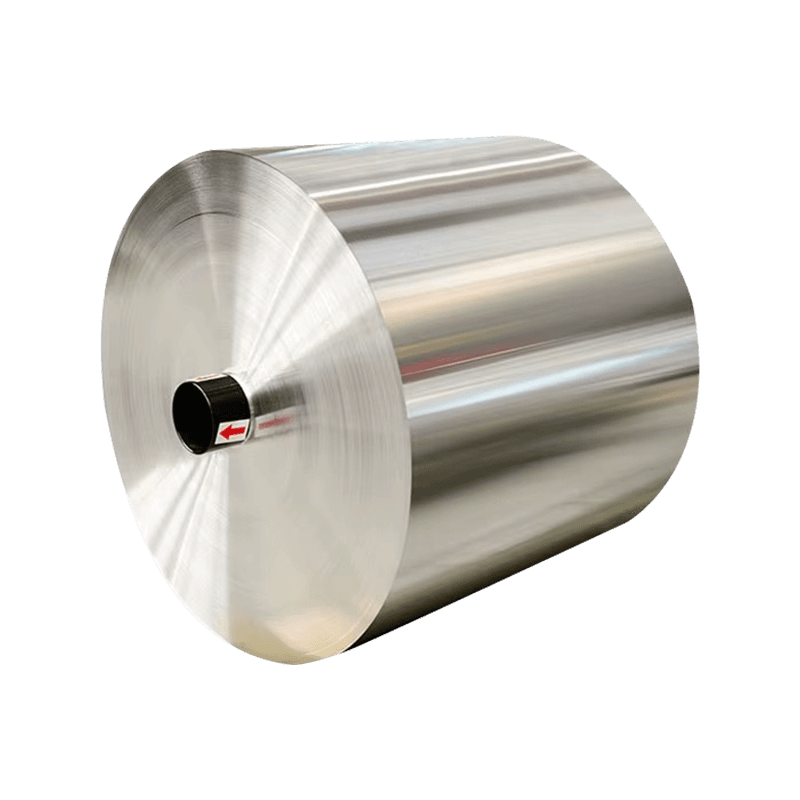
The 8011-O Ultra-Thin Aluminum Foil, Al-Fe-Si alloy contains a small amount of iron and silicon elem...
See Details -
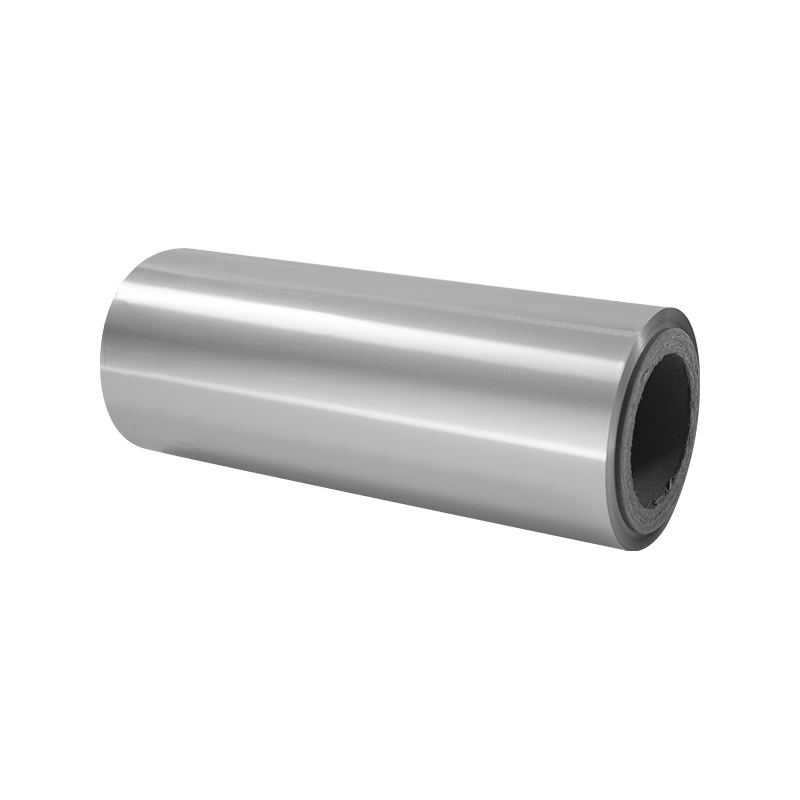
AL/PE Laminate Film combines the barrier properties of aluminum foil with the flexibility and heat-s...
See Details -
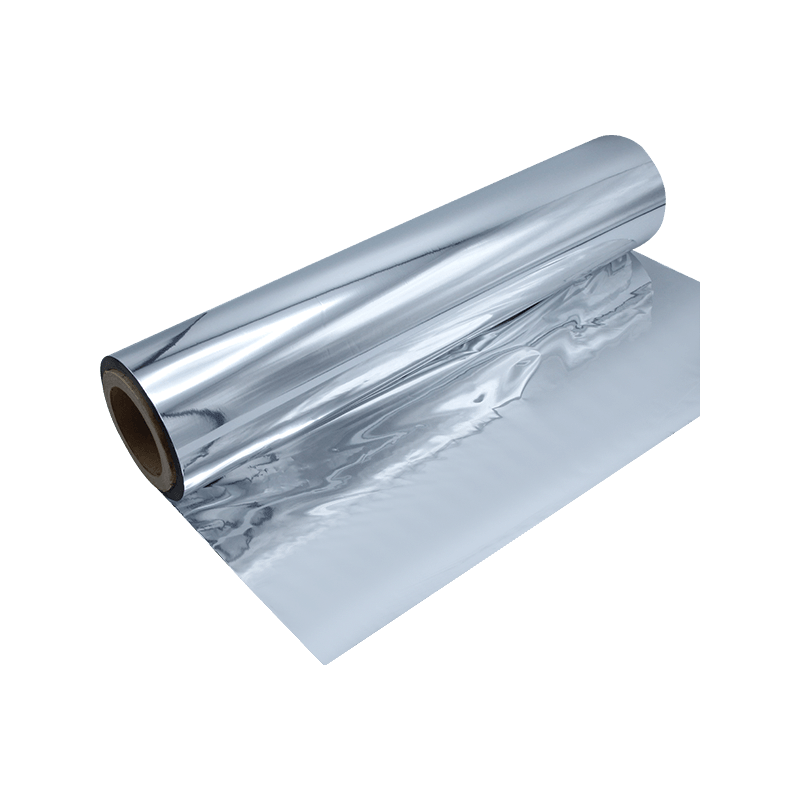
This dual-layer structure significantly improves barrier properties, durability, and cost-effectiven...
See Details