English
 Español
 Português
AL/PE Woven Fabric is a high-performance composite material made by laminating premium aluminum foil...
See Details
Industry News
Home / News / Industry News / Metallized Film vs. Aluminum Foil: Which One Should You Choose for Your Application?
Metallized Film vs. Aluminum Foil: Which One Should You Choose for Your Application?
Date:Jun 15, 2026
Understanding the Two Materials: What They Are and How They Are Made
Metallized film and aluminum foil are both widely used in packaging, insulation, and industrial applications, and both rely on aluminum's reflective and barrier properties. However, they are fundamentally different materials with distinct manufacturing processes, physical structures, and performance profiles. Confusing the two — or selecting one when the other is more appropriate — can lead to significant quality, cost, or functional issues in the finished product.
Aluminum foil is produced by rolling aluminum ingots or slabs through a series of progressively thinner rolling passes until the desired thickness is achieved. Standard foil gauges used in packaging range from 6 to 200 microns, with household foil typically around 16 microns and industrial or pharmaceutical-grade foil ranging from 20 to 100 microns. The result is a freestanding, solid aluminum layer with a continuous, pinhole-free metal structure at any thickness above approximately 25 microns.
Metallized film, by contrast, is a polymer film — most commonly biaxially oriented polypropylene (BOPP), polyethylene terephthalate (PET), or cast polypropylene (CPP) — onto which a very thin layer of aluminum is vacuum-deposited in a process called physical vapor deposition (PVD). The aluminum layer in a metallized film is typically only 20 to 100 nanometers thick — roughly 100 to 500 times thinner than the thinnest conventional aluminum foil. This layer is not freestanding; it is supported entirely by the polymer substrate beneath it.
Barrier Performance: Where the Biggest Difference Lies
The most consequential difference between metallized film and aluminum foil is their barrier performance against oxygen, water vapor, light, and volatile compounds. A solid aluminum foil layer of 9 microns or more is effectively impermeable to gases and moisture under standard conditions, delivering oxygen transmission rates (OTR) below 0.01 cc/m²/day and water vapor transmission rates (WVTR) below 0.01 g/m²/day. This near-absolute barrier makes foil the material of choice for products requiring multi-year shelf stability, such as pharmaceutical blister packs, retort pouches, and long-life food sachets.
Metallized film provides a significantly improved barrier compared to uncoated polymer film, but it does not approach the performance of solid foil. Typical OTR values for metallized PET or BOPP fall in the range of 0.5 to 5 cc/m²/day, and WVTR values of 0.1 to 1 g/m²/day are common. The nanometer-scale aluminum coating inevitably contains nanoscale defects, pinholes, and areas of inconsistent deposition that limit its absolute barrier capability. Furthermore, the metallized layer is fragile — flexing, creasing, or stretching the film during converting or use can crack the aluminum coating and sharply degrade its barrier performance.
For applications requiring moderate barrier improvement over plain film — such as snack food bags, confectionery wrappers, or general decorative packaging — metallized film is often entirely adequate. For applications where barrier failure has serious consequences, such as moisture-sensitive electronics, pharmaceuticals, or high-fat foods with extended shelf life targets, aluminum foil remains the benchmark.
Side-by-Side Comparison of Key Properties
The table below summarizes the principal differences between metallized film and aluminum foil across the properties most relevant to packaging and industrial selection decisions:
| Property | Metallized Film | Aluminum Foil |
| Aluminum layer thickness | 20–100 nm | 6–200 µm |
| OTR (typical) | 0.5–5 cc/m²/day | <0.01 cc/m²/day |
| WVTR (typical) | 0.1–1 g/m²/day | <0.01 g/m²/day |
| Flexibility / formability | High (polymer substrate) | Moderate (dead-fold) |
| Weight / areal density | Low | Higher |
| Puncture resistance | Good (from polymer) | Lower at thin gauges |
| Printability | Excellent | Good (with treatment) |
| Recyclability | Difficult (mixed material) | Recyclable (when clean) |
| Cost (relative) | Lower | Higher |
| Microwave compatibility | Generally safe | Not compatible |
Despite their structural differences, metallized film and aluminum foil share several important characteristics that explain why both are so widely used across overlapping application spaces. Both materials provide excellent light barrier performance, blocking visible, UV, and infrared radiation effectively. This makes both suitable for packaging light-sensitive products such as photographic materials, certain pharmaceuticals, and flavor-sensitive foods where light-induced oxidation or degradation is a concern.
Both materials also exhibit high reflectivity, which is exploited in thermal insulation, decorative, and agricultural applications. Their metallic appearance is valued aesthetically in premium packaging, and both can be laminated to paper, polymer films, or nonwovens to create composite structures with tailored performance profiles. In addition, both materials support gravure and flexographic printing when appropriately surface-treated, enabling high-quality graphics for retail packaging.
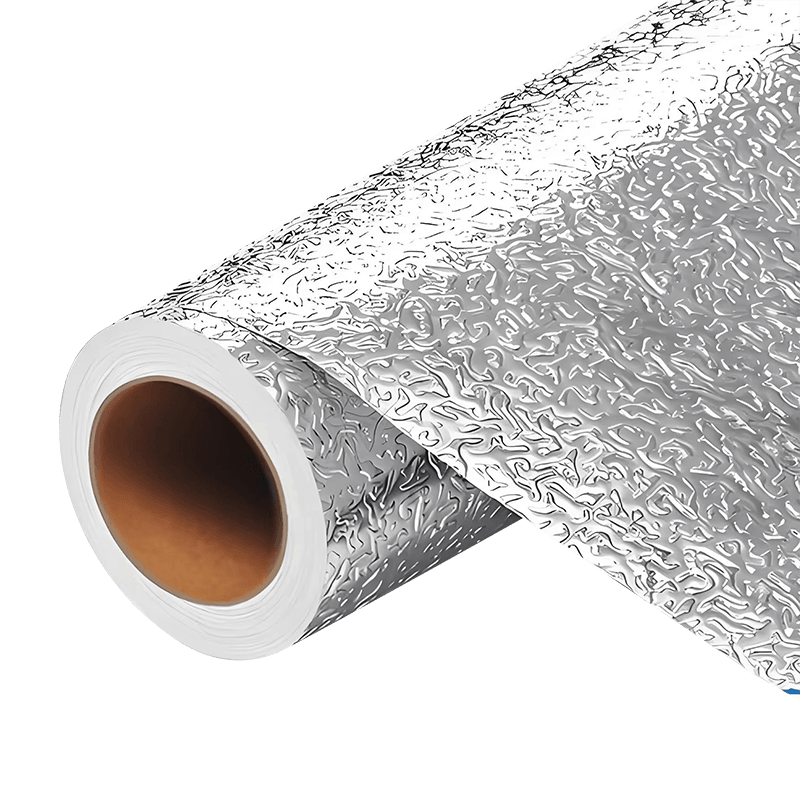
Applications of Metallized Film
Metallized film's combination of moderate barrier performance, light weight, flexibility, and low cost makes it the dominant choice across a broad range of packaging and non-packaging applications:
- Flexible snack and confectionery packaging: Potato chip bags, chocolate wrappers, biscuit pouches, and similar products use metallized BOPP or metallized CPP for their combination of barrier improvement, stiffness, and high-gloss visual appeal at competitive cost.
- Coffee and tea packaging: Metallized PET or BOPP pouches with one-way degassing valves are used for roasted coffee packaging, where the moderate barrier combined with the valve controls CO₂ off-gassing while blocking oxygen ingress during the product's typical shelf life of 6 to 12 months.
- Decorative and premium packaging: Metallized films are widely used for gift wrapping, label stock, bottle sleeves, and luxury product outer packaging, where the metallic aesthetic is the primary requirement rather than barrier performance.
- Thermal insulation blankets and reflective liners: Metallized PET or metallized PE films are used in emergency blankets, radiant barrier insulation for buildings and vehicles, and cargo pallet covers where light weight and reflectivity matter more than pinhole-free barrier performance.
- Agricultural films: Metallized films are used as reflective mulch films in horticulture to manage soil temperature, suppress weeds, and repel insects through light reflection — an application where barrier performance is irrelevant and reflectivity is everything.
- Electronics and capacitor films: Thin metallized polymer films are used as the dielectric medium in film capacitors, where the aluminum coating serves as the electrode rather than as a barrier layer.
Applications of Aluminum Foil
Aluminum foil is selected when the application demands absolute barrier performance, thermal conductivity, dead-fold formability, or compliance with stringent regulatory standards:
- Pharmaceutical blister packaging: Cold-form foil (CFF) and push-through foil lidding for blister packs use aluminum foil as the primary barrier layer protecting tablets and capsules from moisture, oxygen, and light over shelf lives of two to five years. This is arguably the most demanding packaging application in terms of barrier requirements.
- Retort and aseptic pouches: Foil-containing laminates such as PET/AL/PE or PET/AL/CPP are used for retort pouches and aseptic packaging of ready-to-eat meals, soups, and dairy products that must remain shelf-stable for 12 to 24 months without refrigeration.
- Pharmaceutical sachet and strip pack: Single-dose sachets for powders, granules, and liquid unit doses use foil-based laminates to protect highly moisture-sensitive API formulations and ensure dose integrity throughout the supply chain.
- Household and foodservice foil: Standard household aluminum foil for wrapping, baking, and grilling exploits the material's thermal conductivity, dead-fold retention, and grease resistance — properties no metallized film can replicate.
- Technical insulation and HVAC applications: Foil-faced insulation boards, duct wrap, and pipe insulation products use aluminum foil laminated to glass wool, foam, or kraft paper for combined thermal, moisture, and vapor barrier performance in building and mechanical systems.
- Lidding for dairy and beverage containers: Peelable foil lidding for yogurt cups, cream containers, and juice packs relies on foil's combination of formability, barrier performance, and heat-sealability to glass, PP, and PS substrates.
Flexibility and Formability: Practical Handling Differences
One of the most practically significant differences between the two materials is how they behave during converting, filling, and end-use. Aluminum foil exhibits dead-fold behavior — it retains the shape it is formed into without springback. This property makes it ideal for wrapping irregular products, forming blister cavities, and creating tamper-evident closures. However, foil is also prone to cracking, pinholing, and tearing if flexed repeatedly or sharply creased, particularly at thinner gauges below 12 microns.
Metallized film, by contrast, behaves like its polymer substrate — it is elastic, puncture-resistant, and tolerates repeated flexing without mechanical failure of the substrate itself. The aluminum coating, however, is far more fragile than the substrate and will crack if the film is bent sharply, stretched beyond the aluminum layer's elastic limit, or repeatedly flexed during transit. For this reason, metallized film's barrier performance in a real packaging environment — after printing, laminating, form-fill-seal processing, and distribution — is typically lower than what is measured on a flat, uncreased sample in the laboratory.
Cost, Sustainability, and Selection Guidance
From a cost perspective, metallized film is significantly less expensive than aluminum foil for equivalent area coverage, because the aluminum content per square meter is a tiny fraction of what foil contains. For high-volume, cost-sensitive packaging categories where moderate barrier performance is sufficient, this cost advantage is often decisive. The lower weight of metallized film also reduces transportation costs and carbon footprint per unit of packaged product.
On sustainability, neither material is without challenges. Aluminum foil is technically recyclable as aluminum, but foil-containing laminates bonded to polymer layers are extremely difficult to separate and are rarely recycled in practice. Metallized film presents similar challenges — the nanometer aluminum layer cannot be practically separated from the polymer substrate, making the composite non-recyclable through standard streams. Both materials face growing regulatory and brand pressure to develop more recyclable alternatives, with mono-material high-barrier polymer films and oxide-coated films being explored as future substitutes in some applications.
When selecting between the two materials, the decision framework should center on three questions: What is the required shelf life and barrier level? What mechanical demands will the packaging face during processing and distribution? And what cost and weight constraints apply? For shelf lives beyond 12 months, moisture-critical or oxygen-critical products, or pharmaceutical and medical applications, aluminum foil in a laminate structure is nearly always the correct choice. For shelf lives of 3 to 12 months, moderate-sensitivity products, and cost-competitive consumer goods, metallized film offers a capable and economical solution that adequately serves the application without over-engineering the barrier system.
Content
- 1 Understanding the Two Materials: What They Are and How They Are Made
- 2 Barrier Performance: Where the Biggest Difference Lies
- 3 Side-by-Side Comparison of Key Properties
- 4 Shared Characteristics and Common Ground
- 5 Applications of Metallized Film
- 6 Applications of Aluminum Foil
- 7 Flexibility and Formability: Practical Handling Differences
- 8 Cost, Sustainability, and Selection Guidance
Recommended Articles
Related products
-
-
The 8011-O Ultra-Thin Aluminum Foil, Al-Fe-Si alloy contains a small amount of iron and silicon elem...
See Details -

It is widely used in scenarios such as air filters, corrugated aluminum foil, phenolic board veneers...
See Details -
Reinforced PVC Mesh Fabric Film is a composite material made by laminating PVC film with a high-stre...
See Details -
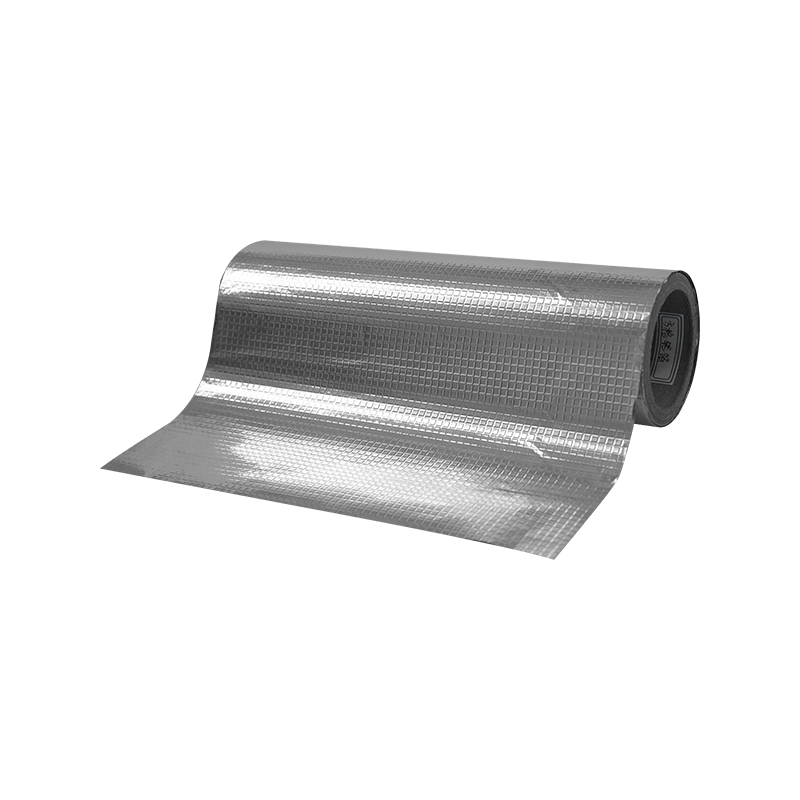
AL/PET Laminate Film is a high-performance composite film combining the metallic barrier of aluminum...
See Details -
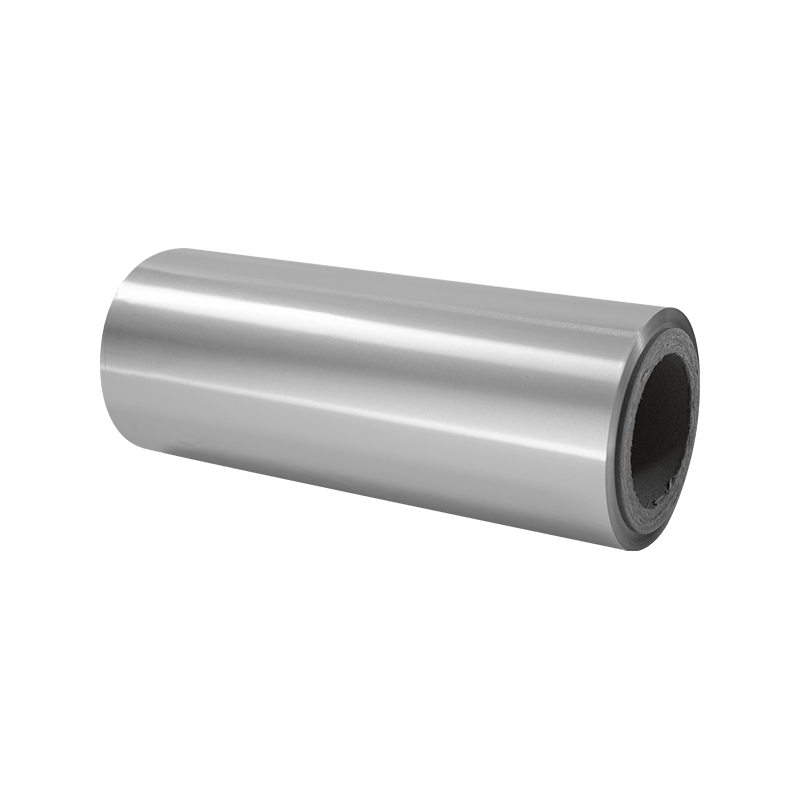
AL/PE Laminate Film combines the barrier properties of aluminum foil with the flexibility and heat-s...
See Details