English
 Español
 Português
The four-layer composite film of PET/AL/PA/CPP combines four materials with distinct properties thro...
See Details
Industry News
Home / News / Industry News / What Makes PET/AL/PET Triplex Film Superior to Single- and Dual-Layer Flexible Materials?
What Makes PET/AL/PET Triplex Film Superior to Single- and Dual-Layer Flexible Materials?
Date:Jun 09, 2026
PET/AL/PET triplex film is a three-layer composite laminate in which an aluminum foil core is sandwiched symmetrically between two polyethylene terephthalate (PET) film layers. This construction is one of the most technically refined flexible composite structures used in packaging, insulation, electronics, and industrial applications, and its growing adoption across these sectors reflects a clear set of performance advantages that neither single-layer films nor simpler dual-layer laminates can match. Understanding the structural logic of the triplex configuration — and the specific properties each layer contributes — is the starting point for evaluating why this composite is specified wherever demanding barrier, thermal, mechanical, and aesthetic requirements must be met simultaneously.
The Three-Layer Architecture and What Each Layer Contributes
The design logic of PET/AL/PET triplex film is not simply additive — it is synergistic. Each layer performs specific functions, and their combined effect produces a material that substantially exceeds the performance envelope of any individual component. The aluminum foil core, typically 6 to 12 microns thick, provides the composite's barrier and reflective properties. Aluminum at thicknesses above approximately 9 microns achieves near-perfect impermeability to water vapor, oxygen, light, and aromatic compounds, with water vapor transmission rates (WVTR) below 0.01 g/m²/day and oxygen transmission rates effectively at zero under standard test conditions. These values are several orders of magnitude superior to metallized polymer films, which deposit only 40 to 80 nanometers of aluminum on a polymer substrate and leave submicron gaps that permit measurable gas and vapor transmission.
The outer and inner PET film layers — each typically 12 to 25 microns thick — perform a different but equally critical set of functions. PET is a semi-crystalline thermoplastic polyester with a tensile strength of 170 to 220 MPa, elongation at break of 70% to 130%, and a continuous service temperature range of −60°C to +150°C. Applied to both faces of the aluminum core, the PET layers protect the foil from mechanical damage — abrasion, flexural cracking, and pinhole formation — while providing the printable, heat-resistant outer surface that packaging and industrial applications require. The symmetric placement of PET on both sides of the aluminum core is a defining feature of the triplex construction that distinguishes it from asymmetric laminates such as PET/AL/PE.
In asymmetric constructions, differential thermal expansion and moisture absorption between dissimilar outer layers causes the laminate to curl — a phenomenon called "bowing" that creates significant problems in high-speed packaging machinery, precision die-cutting, and flat-format applications. The PET/AL/PET configuration eliminates this problem entirely by placing identical polymer layers on both faces. The coefficient of thermal expansion (CTE) and moisture absorption rate of both outer layers are matched, so the laminate remains dimensionally flat across the full range of processing and end-use temperatures. This is one of the most practically significant advantages of the triplex construction and a primary reason it is preferred over simpler asymmetric composites in demanding applications.
Barrier Performance: How the Triplex Construction Protects Against Permeation
The barrier performance of PET/AL/PET triplex film is its most commercially significant property and the primary reason it is specified in food packaging, pharmaceutical blister lidding, electrolytic capacitor housings, and lithium battery pouch cells. The aluminum core provides absolute barrier properties against all molecular species — water vapor, oxygen, nitrogen, carbon dioxide, light, and aromatic compounds — provided the foil is pinhole-free. The PET layers contribute additional barrier function against physical puncture damage that could create pinholes in the aluminum during handling, converting, and end-use, preserving barrier integrity throughout the product's service life.
Barrier Property Comparison Across Flexible Film Constructions
The following table compares barrier performance of PET/AL/PET triplex film against commonly specified alternative flexible structures:
| Film Construction | WVTR (g/m²/day) | OTR (cc/m²/day) | Light Barrier |
|---|---|---|---|
| PET/AL/PET Triplex | < 0.01 | ~0.00 | Complete (100%) |
| Metallized PET (VMPET) | 0.2–1.5 | 0.5–5.0 | Partial (95–99%) |
| Plain PET Film (12 µm) | 10–20 | 30–60 | None |
| BOPP Film (20 µm) | 4–8 | 1,500–2,500 | None |
| PET/AL/PE Asymmetric | < 0.01 | ~0.00 | Complete (100%) |
The data confirms that PET/AL/PET achieves barrier values that metallized films cannot match, particularly in high-humidity, high-temperature conditions where metallized layer defects propagate and barrier performance of VMPET degrades significantly. For products with shelf-life requirements of two years or more — pharmaceutical tablets, electrolytic capacitor housings, lithium battery pouches, and long-life food products — the absolute barrier provided by the aluminum foil core in a PET/AL/PET construction is the only flexible material solution that reliably meets specification.
Mechanical Advantages of the Symmetric Triplex Configuration
Beyond barrier performance, the mechanical properties of PET/AL/PET triplex film represent a significant advancement over both single-layer films and asymmetric foil laminates. The symmetric PET outer layers create a composite beam effect in the through-thickness direction: when the laminate is flexed, the outer PET layers experience tensile and compressive stresses that they are well-suited to absorb, while the aluminum core remains protected in the neutral zone near the center of the laminate's thickness. This beam architecture is why PET/AL/PET triplex film can withstand substantially more flexural cycles before developing aluminum layer cracks or pinholes compared to unsupported aluminum foil or single-sided foil laminates.
Puncture resistance is enhanced by the same mechanism. The outer PET layers distribute point-loading forces over a broader area before the stress reaches the aluminum core, increasing the energy required to penetrate through to the foil layer. In pharmaceutical blister lidding applications, this puncture resistance is directly related to child-resistant packaging compliance — a higher puncture force is required to push tablets through the lidding, meeting regulatory thresholds without requiring additional laminate layers. For electrolytic capacitor housings and lithium battery pouch cells, puncture resistance is a safety-critical property since foil perforation can cause electrolyte leakage or short-circuit events.
Dimensional Stability Under Thermal and Humidity Cycling
The symmetric construction of PET/AL/PET provides exceptional dimensional stability under the thermal and humidity cycling encountered in processing and end-use environments. PET has a glass transition temperature (Tg) of approximately 75°C and a melting point of 255°C, giving it a wide processing window above ambient conditions without deformation. When both outer layers are PET, their identical hygroscopic expansion behavior — PET absorbs approximately 0.1% to 0.3% moisture at 50% relative humidity — ensures that the laminate expands and contracts uniformly on both faces, maintaining flatness and register accuracy through printing, die-cutting, and heat-sealing operations that involve significant temperature excursions.
Thermal Resistance and Reflective Properties for Industrial Applications
PET/AL/PET triplex film is widely used in thermal management and insulation applications where its combination of aluminum reflectivity, PET thermal stability, and symmetric mechanical construction provides advantages that single-material solutions cannot replicate. The aluminum core reflects 95% to 97% of incident infrared radiation, providing an effective radiant barrier when oriented with an air gap on the reflective face. The PET outer layers protect the aluminum surface from oxidation and mechanical abrasion — both of which reduce reflectivity over time — allowing the composite to maintain its thermal performance across its service life in building insulation, automotive heat shielding, and industrial pipe and vessel wrap applications.
The PET layers also contribute directly to the laminate's thermal resistance by providing a polymer insulating layer on both faces of the aluminum foil. While the thermal conductivity of PET (approximately 0.15 to 0.24 W/m·K) is far lower than aluminum (205 W/m·K), the added polymer layers reduce the overall thermal conductance of the composite compared to bare aluminum foil, marginally improving the insulating value of the construction in conduction-dominated heat transfer scenarios. In HVAC flexible duct applications and building wrap products, this combined radiant and conductive resistance contributes to the R-value calculations that determine code compliance for the insulation assembly.
For automotive underbody heat shields and exhaust system wraps, the PET layers provide chemical resistance to road splash contaminants — salts, oils, and cleaning agents — that would oxidize and discolor unprotected aluminum surfaces, degrading their reflective performance. The ability of PET/AL/PET to maintain its reflectivity in chemically aggressive environments extends service life significantly compared to unprotected foil or single-sided foil constructions.
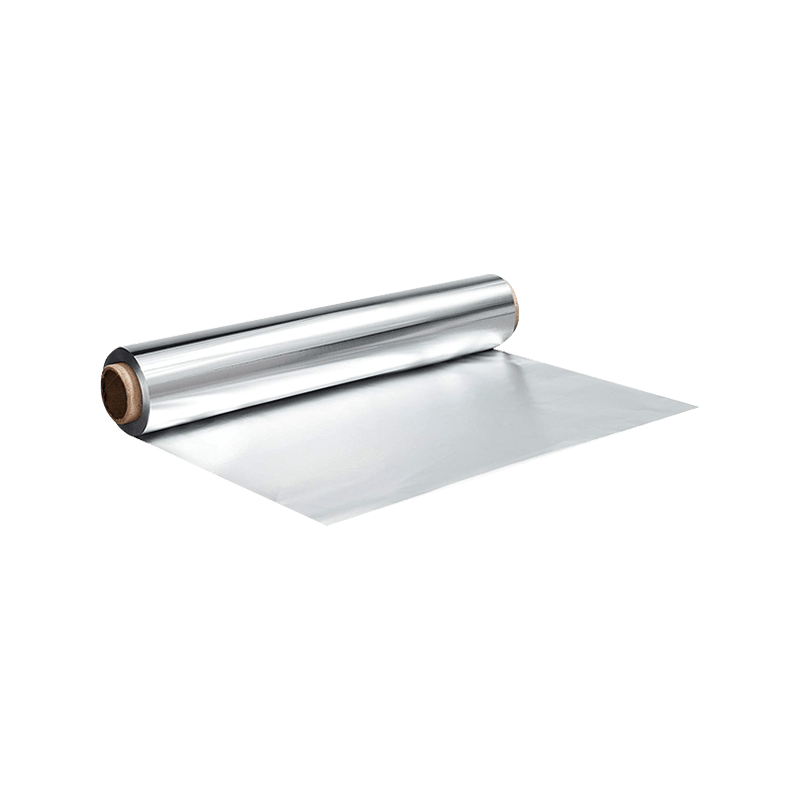
Key Application Sectors Where PET/AL/PET Triplex Film Is Specified
The combination of absolute barrier performance, symmetric mechanical stability, thermal resistance, and printable outer surfaces makes PET/AL/PET triplex film the material of choice across several high-value application sectors where performance compromises are unacceptable.
- Lithium-ion battery pouch cells: PET/AL/PET-based aluminum plastic film (APF) is the standard housing material for pouch-format lithium batteries used in consumer electronics, electric vehicles, and energy storage systems. The outer PET layer provides electrical insulation and abrasion resistance; the aluminum core provides electrolyte barrier and structural rigidity; the inner layer (typically modified PP or CPP in battery-grade constructions) provides chemical resistance to electrolyte and heat-sealability for pouch formation. The symmetric outer PET construction ensures dimensional stability through the deep-drawing forming process used to create the battery cavity.
- Pharmaceutical packaging: Cold-form blister packaging (also called Alu-Alu blisters) uses PET/AL/PET or nylon/AL/PET constructions to form rigid, hermetically sealed cavities for moisture-sensitive tablets and capsules. The aluminum core provides absolute moisture barrier without requiring elevated temperatures during forming — a critical advantage for thermally sensitive pharmaceutical actives. PET/AL/PET constructions are preferred over nylon-based alternatives in applications where dimensional stability under humidity variation is critical.
- Electrolytic capacitor housings: PET/AL/PET tape is used to wrap and house electrolytic capacitors in industrial and consumer electronic applications. The combination of aluminum electrolyte barrier, PET electrical insulation, and the symmetric construction's resistance to cracking under repeated thermal cycling makes this triplex the standard specification for high-reliability capacitor housings.
- High-barrier flexible food packaging: Retort pouches and long shelf-life standing pouches for processed meats, ready meals, and nutritional products use PET/AL/PET as the core barrier layer in multi-layer pouch constructions. The PET outer layers are reverse-printed with product graphics and provide the heat resistance needed to survive retort sterilization at 121°C without delamination or optical distortion.
- Building and HVAC insulation facing: PET/AL/PET laminates are used as the outer facing on rigid foam insulation panels, duct insulation wraps, and radiant barrier products where the reflective aluminum face must be protected on both sides from moisture and mechanical damage during storage, transportation, and installation.
Manufacturing Considerations and Specification Parameters
PET/AL/PET triplex film is produced by dry adhesive lamination or extrusion lamination of pre-produced PET film and aluminum foil rolls. In dry lamination — the predominant method for high-performance constructions — a polyurethane (PU) two-component adhesive is applied to the aluminum foil surface at coat weights of 2.5 to 4.5 g/m² dry, dried in a tunnel oven, and nip-bonded to the first PET film layer. After curing, the process is repeated to bond the second PET layer to the opposite aluminum face. The curing period of 48 to 72 hours at 40°C to 50°C is critical for developing the full cross-linked bond strength that determines delamination resistance in the finished laminate.
Key specification parameters that must be defined when ordering PET/AL/PET triplex film for a specific application include the thickness of each layer (outer PET / AL / inner PET in microns), the total basis weight in g/m², the adhesive system (solvent-based PU for maximum bond strength, solvent-free PU for food-contact compliance), the aluminum foil temper (soft for forming applications, hard for flat applications), and any additional surface treatments required — such as corona treatment on the PET outer face for printability or matte finish coatings for reduced glare in display applications.
The most common standard construction for general industrial and packaging use is 12 µm PET / 9 µm AL / 12 µm PET, with a total basis weight of approximately 75 to 85 g/m². For applications requiring higher forming depth — such as battery pouch cell cavities or cold-form pharmaceutical blisters — aluminum foil thickness is increased to 40 to 80 microns and the PET outer layers may be replaced with nylon (PA) to improve cold-forming elongation. These construction modifications address specific application demands while retaining the fundamental symmetric-triplex architecture that delivers the dimensional stability and balanced mechanical performance that define PET/AL/PET as a material category.
Content
- 1 The Three-Layer Architecture and What Each Layer Contributes
- 2 Barrier Performance: How the Triplex Construction Protects Against Permeation
- 3 Mechanical Advantages of the Symmetric Triplex Configuration
- 4 Thermal Resistance and Reflective Properties for Industrial Applications
- 5 Key Application Sectors Where PET/AL/PET Triplex Film Is Specified
- 6 Manufacturing Considerations and Specification Parameters
Recommended Articles
Related products
-
-

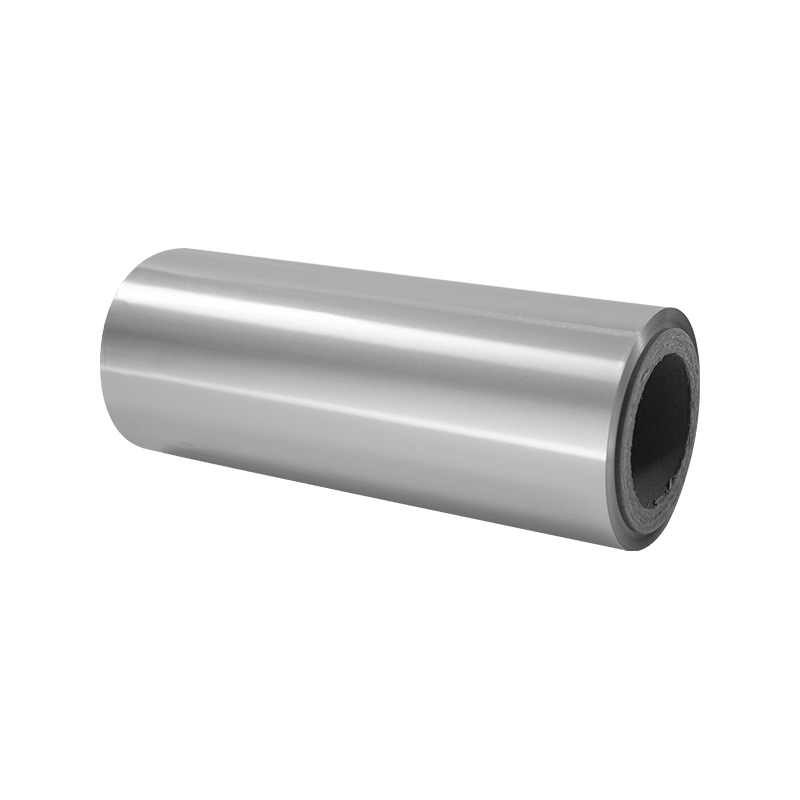
PET/AL/PET Triplex Film is multilayer laminate composed of Polyester (PET) / Aluminum Foil (AL) / Po...
See Details -
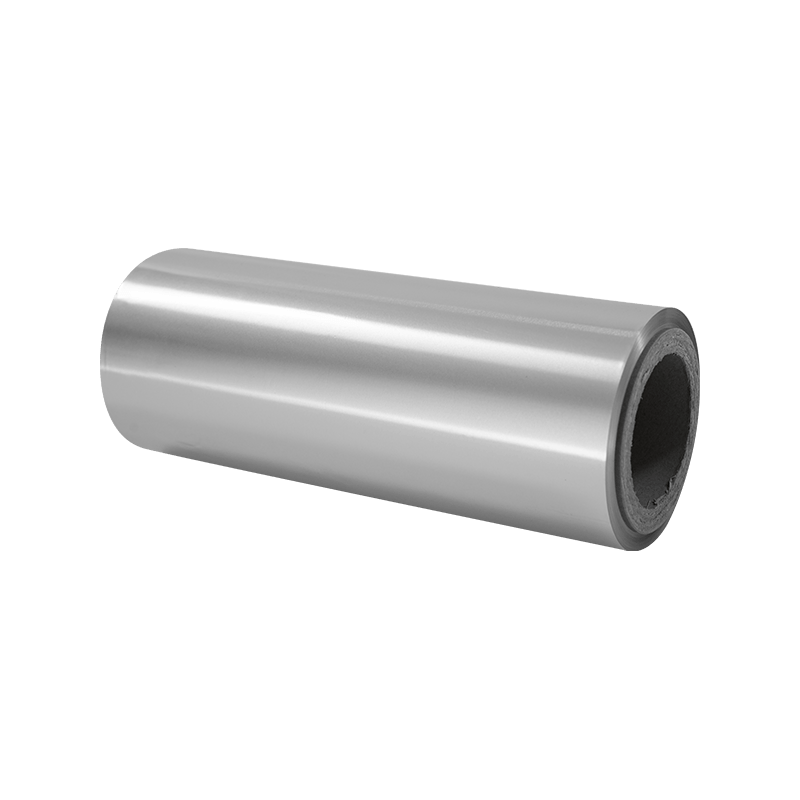
PET/AL/PE Triplex Film is a high-performance composite packaging material engineered with a three-la...
See Details -
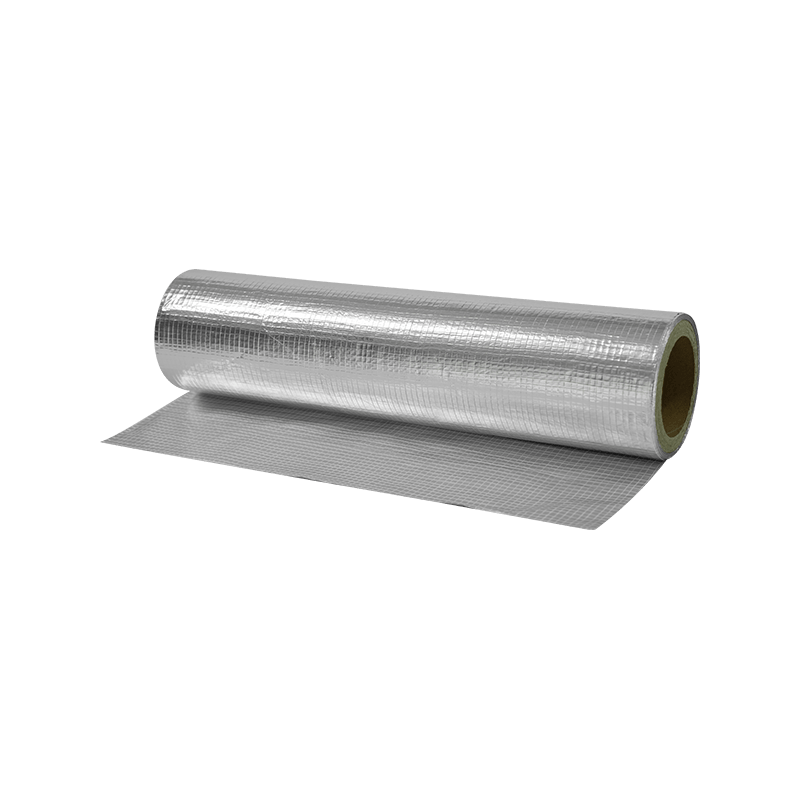
AL Scrim-Reinforced PET Triplex Film is industrial laminate composed of Aluminum Foil (AL), Reinforc...
See Details -
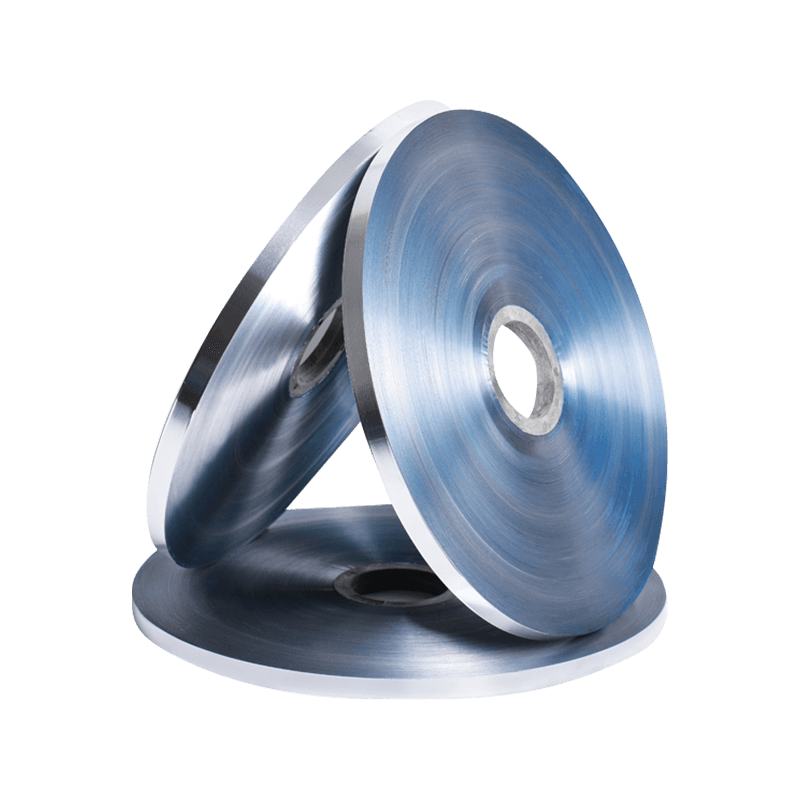
This advanced three-layer structure integrates the barrier and reflective properties of aluminum foi...
See Details -
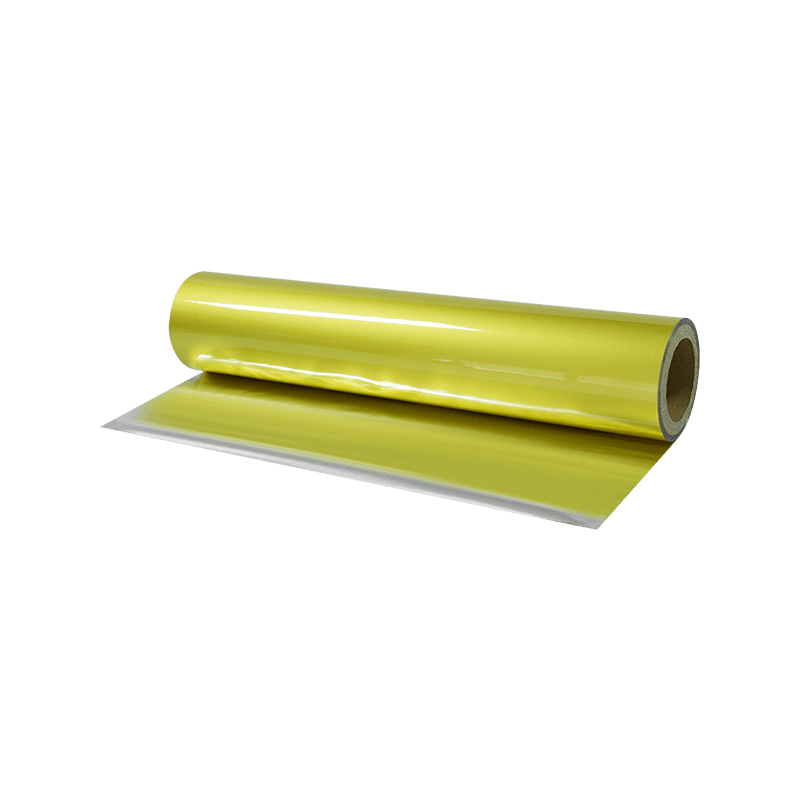
DINGHE AL/PET/VMPET Triplex Film is a high-barrier, multi-functional laminate designed for demanding...
See Details