English
 Español
 Português

CPP film is a type of PP film, which is divided into BOPP film and CPP film. CPP film is a soft film...
See Details
Industry News
Home / News / Industry News / Zero Delamination Under 180°C–200°C: How Heat-Resistant Adhesive Formulations Protect Bituminous Membrane Facings
Zero Delamination Under 180°C–200°C: How Heat-Resistant Adhesive Formulations Protect Bituminous Membrane Facings
Date:Nov 16, 2026
What Happens to a Foil Facing When Hot Bitumen Hits It
Anyone who has stood beside a modified bitumen membrane line knows how violent the coating step is. SBS or APP modified bitumen is applied in a continuous pass at temperatures of roughly 180°C to 200°C, and the facing film has to meet that molten layer at line speed, with no chance to cool down first. Whatever sits between the aluminum and its carrier film, usually the adhesive, takes the full thermal shock in a matter of seconds.
An aluminum plastic composite film for bitumen is therefore judged by a harder standard than most laminates. It is not enough to bond well at room temperature. The bond has to survive immersion in hot bitumen, stay flat while the membrane is cooled and wound, and keep holding for the many years the roll will spend on a roof.
When the adhesive is not up to it, the failures are familiar to production teams.
- Heat shrinkage. The carrier film contracts under heat and pulls the facing out of shape, which shows up as wrinkles and uneven edges on the finished roll.
- Blistering. Trapped volatiles or a softened adhesive layer form bubbles between the aluminum and the film, and these often grow once the membrane is installed in the sun.
- Peeling and delamination. The aluminum separates from the plastic layer, sometimes during production and sometimes months afterwards.
- Line stoppages. A broken web or a fouled roller halts the whole line, and the cost of that downtime usually exceeds the saving on the facing.
For a membrane manufacturer, a defective facing is one of the most expensive raw material problems because it can pass unnoticed until the product is in a warehouse or already on a building site.
Why Ordinary Adhesives Fail at 180°C
The reason is chemistry. Many low-cost laminates use water-based adhesives or general-purpose solvent adhesives, which are perfectly adequate for packaging and many other uses. Their polymer chains simply are not built for the temperatures involved in a bitumen coating line.
When such an adhesive meets molten bitumen, the bond line heats almost instantly. The polymer softens and begins to decompose, releasing gas and losing cohesion in the process. The laminate may look acceptable when it leaves the line, because the damage is hidden under a layer of cooled bitumen. Yet the bond has been weakened, and with every day, thermal cycling, UV and moisture continue what the heat began.
That is why the most serious complaints about bituminous membrane facings arrive months after delivery rather than on day one. A roll that looked perfect at the factory shows aluminum lifting away in large patches after a hot season. By then it is installed, the claim involves the roofing contractor and the end client, and the cost of replacement is far higher than the original material.
Anyone buying bituminous membrane raw material should treat adhesive heat resistance as a primary specification, in the same way they would treat thickness or width. A facing that has never been tested at line temperature is a gamble, however good its datasheet looks at 25°C.
How Ding He Builds Heat Resistance Into the Bond
At Hangzhou Ding He we approached the problem from the adhesive upward. After years of working with customers who coat bitumen, we developed a special modified polyurethane adhesive system for high temperatures, and we make it ourselves rather than buying a generic product. Polyurethane suits this role because its cross-linked structure holds together under heat better than the polymers used in standard laminating glues, and we adjust the formulation so that it stays stable through the bitumen coating step.
The adhesive is only half of the answer. How it is applied matters just as much. Our lamination lines use precise dry and thermal processes that control coating weight and tension at the micron level, so the adhesive layer is uniform across the whole width of the roll. An uneven layer creates weak spots, and weak spots are where blisters begin.
With the system matched to the process, the film is designed to withstand the shock of bitumen at up to 200°C without delaminating. At normal temperature the peel strength is 4.0 N/15mm or higher, which gives a margin of safety before the film ever reaches the coating line. For aluminum film delamination prevention, both numbers matter: the bond must be strong when cold and must keep its integrity when hot.
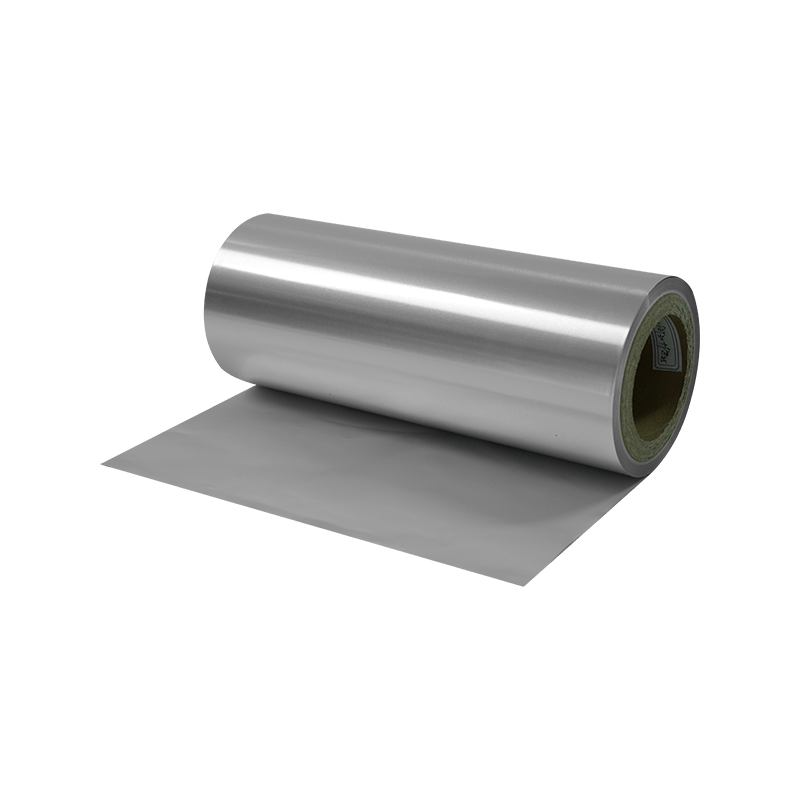 AL/PET Laminate Film for Bitumen Facing and InsulationAluminum foil bonded to PET for moisture, oxygen and light barrier, with strong mechanical strength and dimensional stability.View Product →
For membranes that need extra tear resistance during handling and roofing installation, a reinforced structure with a fiberglass scrim is also available.
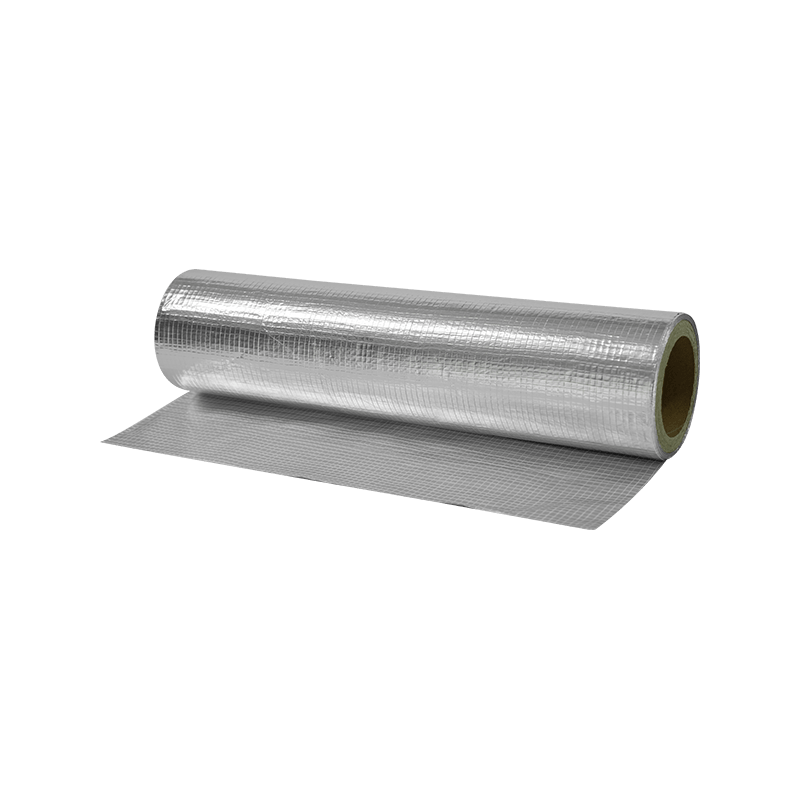 AL/Scrim/PET Triplex Film for Reinforced FacingAluminum foil, fiberglass scrim and PET combined for reflectivity, tensile strength and tear resistance in insulation and hose jackets.View Product →
Checking the Claim: Hot-Dip Simulation and Oven Ageing
A heat-resistance claim means little until it has been tested under conditions that resemble the real process. Our laboratory runs two kinds of check on facing film before it is shipped to bitumen customers.
The first is a hot-dip simulation. A sample is immersed in molten bitumen at 180°C, then removed, cooled and examined for blistering, shrinkage and any separation between the aluminum and the plastic layer. This reproduces the shock the film meets on the coating line far more closely than a simple oven test would.
The second is oven ageing. Samples are held at an elevated temperature for an extended period and then checked again, to see whether the bond keeps its strength over time. That test addresses the problem that costs customers most: films that pass at first and fail months later.
| Test | Condition | What it shows |
| Hot-dip simulation | Immersion in 180°C bitumen melt | Resistance to thermal shock, blistering and delamination |
| Oven ageing | Extended heating in an oven | Long-term stability of the bond |
| Peel strength | Room temperature, 4.0 N/15mm or higher | Starting bond strength before coating |
Results are recorded against the production batch, so a customer can ask for the test data that matches the roll in front of them.
Trial Before You Commit: Free Sample Rolls for Line Testing
No laboratory test replaces your own line. Coating speed, bitumen formulation, cooling arrangement and winding tension all vary from one plant to another, and a facing that works well in one may need a small adjustment in another. For that reason we offer free trial sample rolls, so your team can run a small test on your own equipment before placing a production order.
A sensible trial is simple. Coat a short length at normal line temperature, cool and wind it as usual, then check the surface for wrinkles and blisters and test the peel strength of the finished membrane. If you also keep a sample in an oven for a few weeks, you will learn how the bond behaves over time without waiting for a full season on a roof.
If you are a membrane manufacturer looking for a modified bitumen facing foil that holds up on a hot line, send us your coating temperature, the bitumen type and your current facing structure. We will recommend a laminate, prepare the sample rolls and tell you honestly if another construction would serve your process better.
Content
Recommended Articles
Related products
-
-

Corona Treated PET Film is based on ordinary PET film and has undergone high-frequency charge treatm...
See Details -
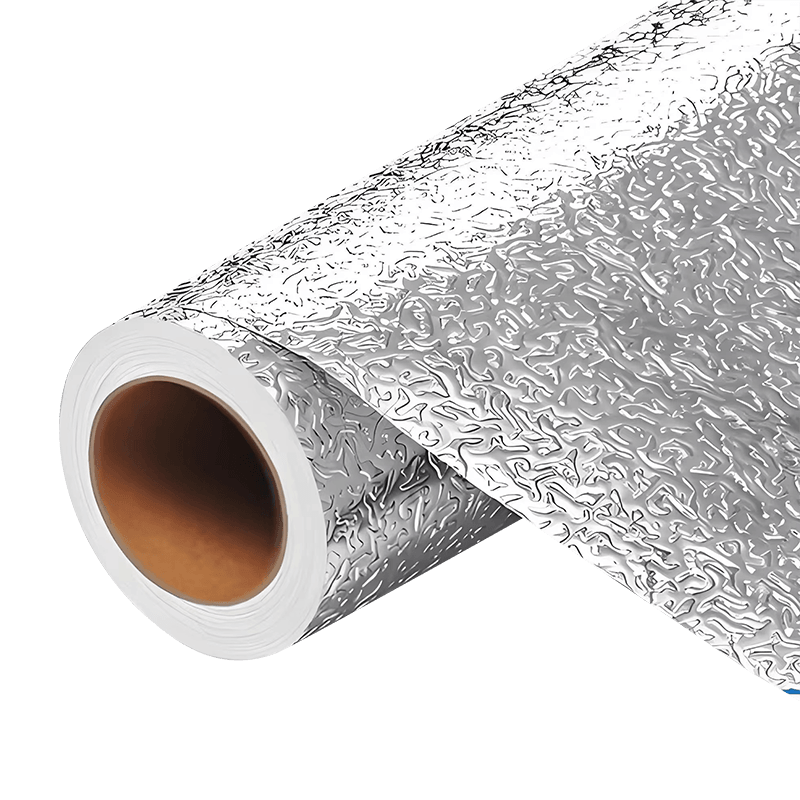
It is widely used in scenarios such as air filters, corrugated aluminum foil, phenolic board veneers...
See Details -
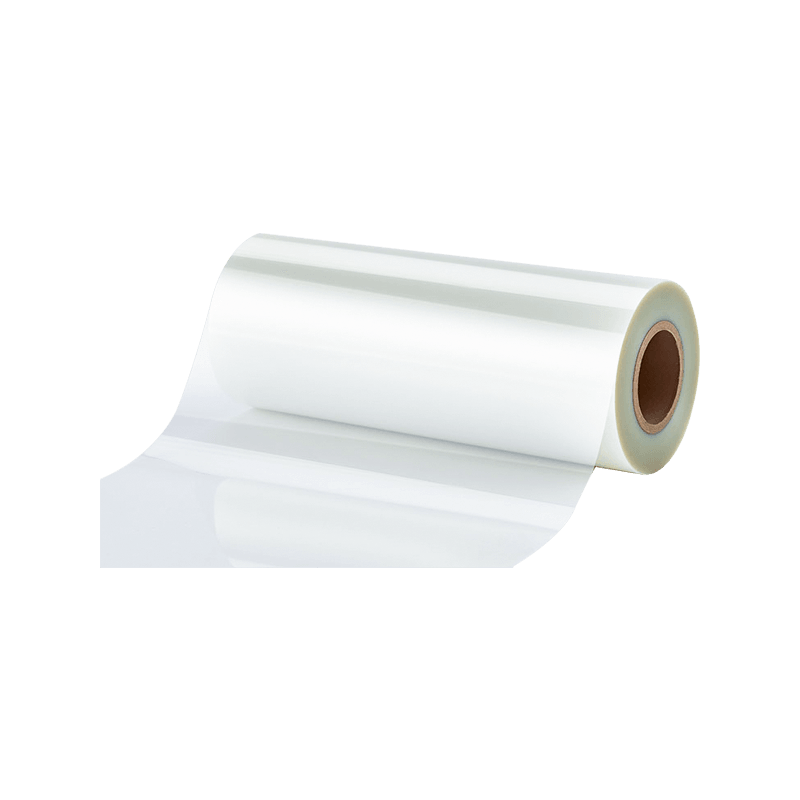
Heat Sealable PET film is different from traditional PET film. While maintaining the excellent perfo...
See Details -

Heat Transfer PET Film, through the film material used in heat transfer technology, can transfer pat...
See Details -

PVC film is a widely used film with softness, UV property, fire resistance and so on properties.This...
See Details