English
 Español
 Português
Aluminum strips are usually around 0.09-0.2mm in thickness, featuring better plasticity and electric...
See Details
Industry News
Home / News / Industry News / Aluminum Strip Manufacturer | Trusted Aluminum Strip Supplier Since 2001
Aluminum Strip Manufacturer | Trusted Aluminum Strip Supplier Since 2001
Date:Sep 14, 2026
Hangzhou Ding He has been rolling aluminum strip for more than 24 years, and that track record is why industrial buyers across five continents keep coming back. Our strip runs in everything from high-speed packaging lines to cable shielding that has to perform without fail. Below, we walk through what actually separates a dependable aluminum strip supplier from the rest — and why manufacturers around the world have made us their go-to source.
What Are Aluminum Strips?
Aluminum strip starts life as a flat-rolled product: slabs get passed through a series of rollers until the metal reaches the thickness a customer needs, then it's slit down into narrower coils. That rolling process is what lets producers turn out consistent strip that can later be formed, stamped, or laminated into just about any component you can think of.
Most strip on the market runs from 0.1 mm up to 6.0 mm thick, in widths anywhere from a few millimetres to over a metre. Go thin enough and strip essentially becomes foil; stay thicker and it holds enough rigidity for structural work. Because it's light, resists corrosion well, and conducts both heat and electricity efficiently, the material shows up across a wide swath of industries.
Aluminum Strip Specifications
Four things tend to come up whenever buyers spec out aluminum strip: alloy, temper, thickness, and width. Dimensional tolerance often matters just as much as chemical composition once you're actually running the material in production.
| Thickness (mm) | Width Tolerance (mm) | Typical Use |
|---|---|---|
| 0.1 – 0.3 | ±0.02 | Foil laminates, cable wrap |
| 0.3 – 1.0 | ±0.03 | Packaging, thin components |
| 1.0 – 3.0 | ±0.05 | HVAC fins, flashing |
| 3.0 – 6.0 | ±0.10 | Structural, heat exchangers |
Beyond standard sizing, we cut custom widths to the exact inch or millimetre, and we can debur and condition edges for jobs where precision really counts. Our slitting lines wind tight, clean coils with minimal sidewall defects — which means fewer surprises once the material hits your own downstream line.
Aluminum Strip Alloys and Tempers
Getting the alloy right is really the whole game — it's what determines whether you end up with the strength, formability, corrosion resistance, and weldability your application actually needs. Here's a quick rundown of the alloy families we supply most often as strip.
| Alloy Series | Key Characteristics | Common Applications |
|---|---|---|
| 1000 series (pure Al) | Very high electrical conductivity, soft, highly formable | Capacitors, cable shielding, heat exchangers |
| 3000 series (Al-Mn) | Good strength, workability, and corrosion resistance | HVAC fins, roofing, automotive radiators |
| 5000 series (Al-Mg) | High strength, excellent weldability, marine corrosion resistance | Marine, structural, industrial vessels |
| 8000 series (e.g., 8011) | Stable properties, ideal for very thin strips and foil | Bottle caps, foil packaging, sealing strips |
Temper is the other half of the equation. O-temper is fully annealed and soft, which makes it a natural fit for deep drawing and lamination work. H14 covers most general forming needs, and H24 lands somewhere in the middle — enough strength for roof flashing and cable wrap without sacrificing too much workability. Not sure which one fits your project? Our technical team can help you land on the right tensile strength or hardness for the job.
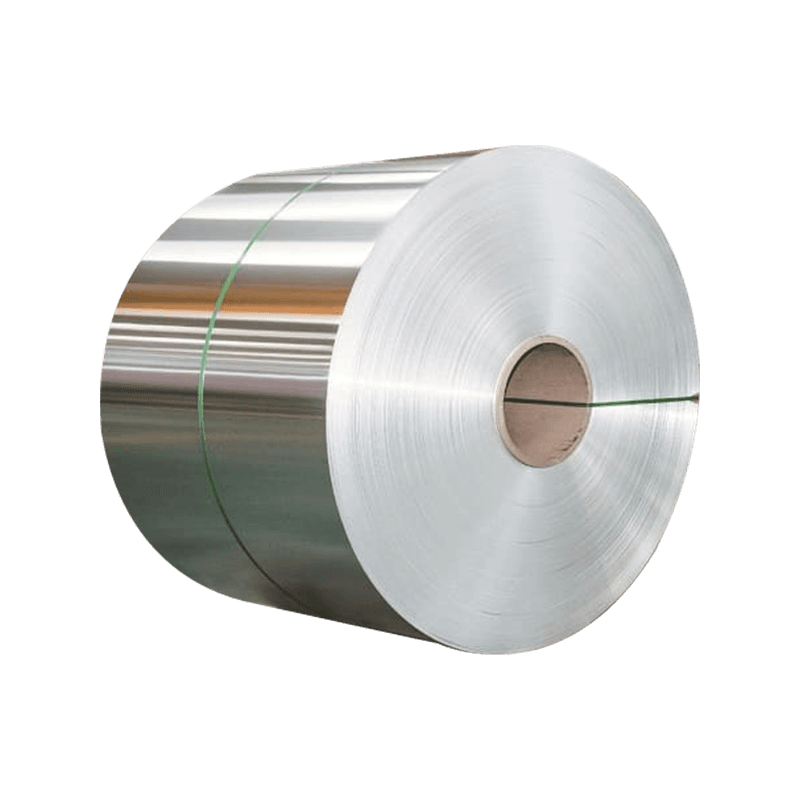
 Aluminum Strip Coils for Cable and Duct ApplicationsThis cold-rolled aluminum strip offers good plasticity and electrical conductivity, making it suitable for cable wrapping and semi-rigid duct production. Various widths and tempers like O and H14 are available.View Product →
How Aluminum Strips Are Manufactured
It starts with DC-cast ingots, which get preheated and hot-rolled down into thick coil. From there, a reduction mill cold-rolls the material across multiple passes until it hits the target gauge. Cold rolling does more than just thin the metal out — it refines the grain structure and sharpens the surface finish along the way. Once rolling is done, the strip goes through a controlled-atmosphere annealing furnace, either to soften it or to lock in the microstructure needed for a specific temper.
Slitting comes last. Master coils get cut into custom widths on precision rotary cutters, and on modern lines, thickness gets measured on the fly while sensors flag surface defects — so only clean material makes it through to packaging.
Quality Control and Certifications
Quality at Hangzhou Ding He begins before rolling even starts — with the ingots themselves — and it doesn't let up through slitting. Every production batch goes through lab testing for chemical composition, tensile strength, elongation, and surface roughness, and we check thickness, width, and edge quality with calibrated instruments along the way.
We also know documentation matters just as much as the material itself for a lot of customers. Mill test certificates, traceability records, certificates of conformance — we provide all of it, built around a quality system that holds up to what international buyers in packaging, construction, and electrical work expect.
Surface Treatments and Customization
The right finish depends entirely on where the strip is headed. Plain, bright-rolled surface works fine for most forming and laminating jobs. Want more grip or a specific look? Embossed strip adds texture. Need better corrosion resistance or a particular coefficient of friction? A coated surface handles that.
- Plain / mill finish: standard smooth surface for general forming.
- Embossed finish: raised pattern for grip, aesthetics, or improved bonding.
- Coated finish: protective lacquer or pressure-sensitive adhesive for specific industries.
- Anodized finish: durable, corrosion-resistant oxide layer for exterior parts.
Packaging is flexible too — small coils if you're just prototyping, large coils for long production runs, or spooled strip built for automated winding lines.
Applications of Aluminum Strips
Punch it, bend it, roll it, laminate it — aluminum strip ends up in an enormous range of finished products because it takes to almost any forming process. A few applications account for most of the demand we see:
- HVAC systems: aluminum fins, heat exchanger plates, and duct connectors rely on strip's excellent thermal conductivity and formability.
- Cable shielding: thin strips and foil are wrapped around conductors to block electromagnetic interference and provide physical protection.
- Specialty packaging: laminated strips act as a robust barrier layer in flexible packaging, which protects food and pharmaceuticals from oxygen and moisture.
- Building and insulation: reflective aluminum surfaces in strip form provide an effective vapour barrier and radiant heat shield in walls and roofs.
Curious about our climate-control work specifically? Take a look at our HVAC ducting solution page.
On top of standard strip, we also produce aluminum-polymer laminates — pairing strip or foil with PET, PE, and other films for barrier applications where flexibility can't be compromised. Our AL/PET laminate film is a good example, and it's become a staple in cable wraps and food packaging alike.
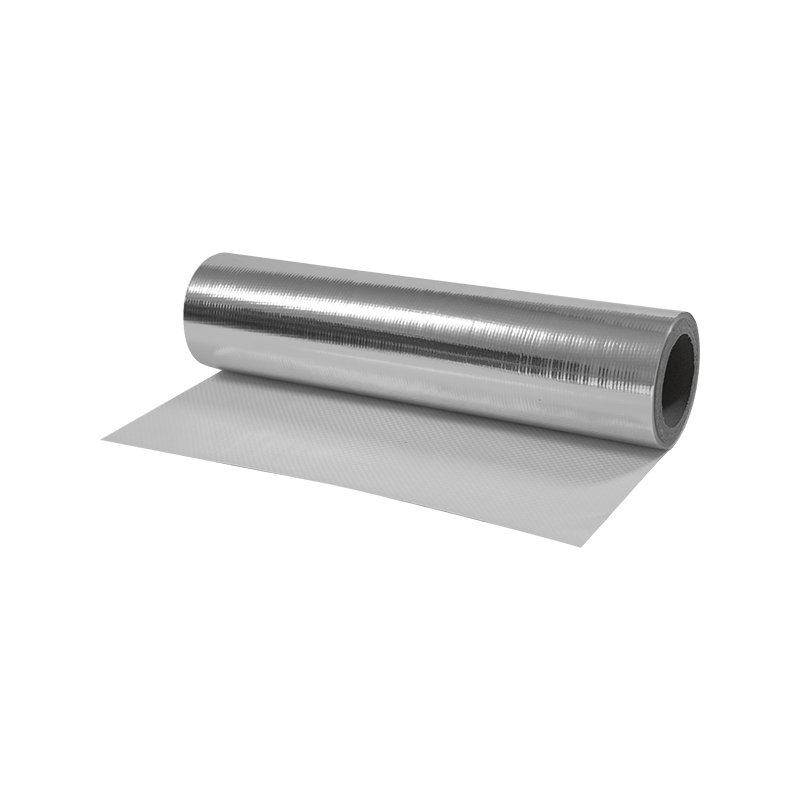
 AL/PET Laminate Film with Flame-Retardant and Antibacterial OptionsThis composite film combines aluminum foil with PET for strong barrier properties. It is used in flexible air ducts and cable shielding, with flame-retardant and antibacterial treatments for enhanced safety.View Product →
Packaging and Global Delivery
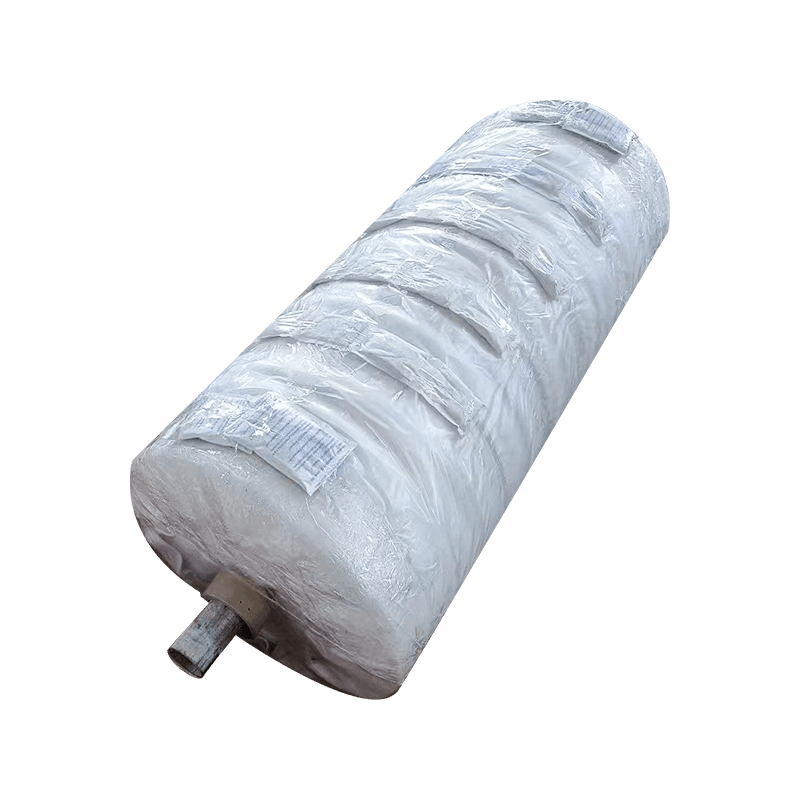
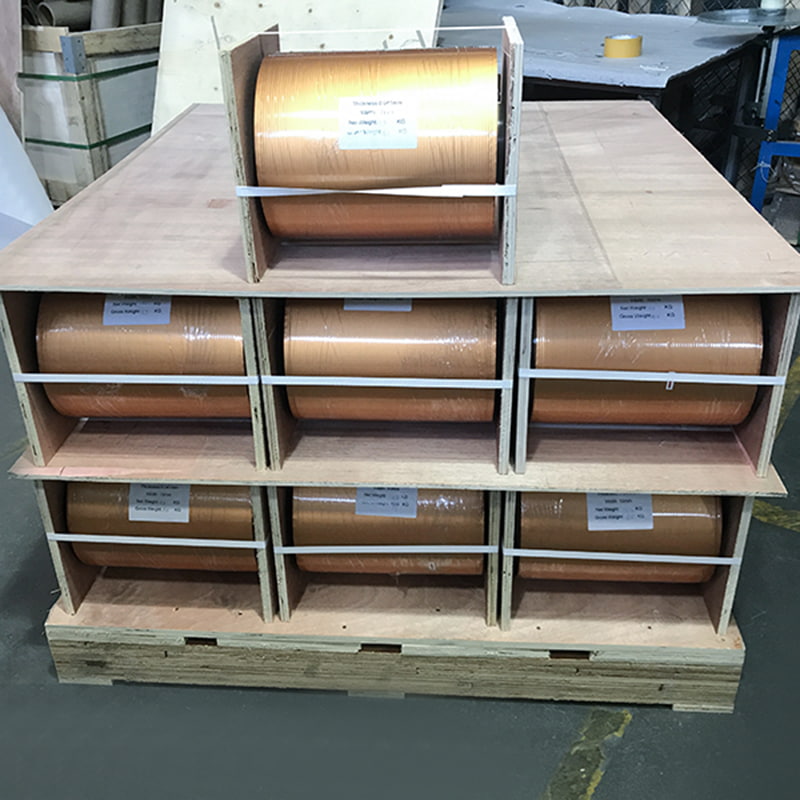
Coil telescoping, edge damage, moisture getting in during transit — good packaging heads off all of it. That's why our coils go out wrapped in moisture-resistant paper, fitted with edge protectors, and set on steel pallets or in eye-to-sky export crates. Shipping by air instead? We switch to lightweight packaging that still holds up, so freight costs stay down.
Exports make up half of what we produce, and we ship to customers in more than 20 countries, so the paperwork side of international trade — packing lists, bills of lading, customs declarations — is second nature to us by now. We lean on logistics partners we trust to keep your coils moving on schedule.
How to Choose an Aluminum Strip Manufacturer
The supplier you pick has a real effect on both product quality and how smoothly your supply chain runs. A few things worth checking before you commit:
- Production capability: Does the supplier produce strips in the alloy and temper you need? Can they hold tight width and thickness tolerances?
- Technical support: A good manufacturer should help you select the right material, not just take orders. Look for engineers who can discuss forming, corrosion, and laminating requirements.
- Quality assurance: Ask for sample test results and certification documentation. A supplier with in-house testing gives you traceability and faster problem resolution.
- Supply reliability: Consistent capacity and on-time delivery are essential. Consider the supplier's plant capacity, inventory levels, and backup arrangements.
Get these right up front, and you'll cut down significantly on batch-to-batch variability and the line stoppages that come with it.
Why Partner with an Experienced Aluminum Strip Manufacturer
What started as a local supplier has grown into Hangzhou Ding He today: an internationally recognised producer of aluminum strip and laminated materials, running 10,000 tons of annual capacity with engineers who've spent over a decade in this field. That combination lets us handle high-volume OEM orders and specialist, niche jobs equally well.
Transparent communication, quality that doesn't waver, service that actually responds — that's how we've built relationships that last. Pilot project or a complex multi-layer laminate, it doesn't matter; our team stays involved from spec sheet to delivery.
Want more detail on the technical side? Our guide on the uses and advantages of aluminum strips covers it.
Picking the right aluminum strip manufacturer isn't a small decision — it shapes your production efficiency, your product's performance, and ultimately how satisfied your own customers are. Decades of experience, an engineering-first approach, and delivery you can count on globally: that's what we bring to the table. Reach out for a quote, a technical consultation, or a free sample.
Content
- 1 What Are Aluminum Strips?
- 2 Aluminum Strip Specifications
- 3 Aluminum Strip Alloys and Tempers
- 4 How Aluminum Strips Are Manufactured
- 5 Quality Control and Certifications
- 6 Surface Treatments and Customization
- 7 Applications of Aluminum Strips
- 8 Packaging and Global Delivery
- 9 How to Choose an Aluminum Strip Manufacturer
- 10 Why Partner with an Experienced Aluminum Strip Manufacturer
Recommended Articles
Related products
-
-
AL/PE Woven Fabric is a high-performance composite material made by laminating premium aluminum foil...
See Details -
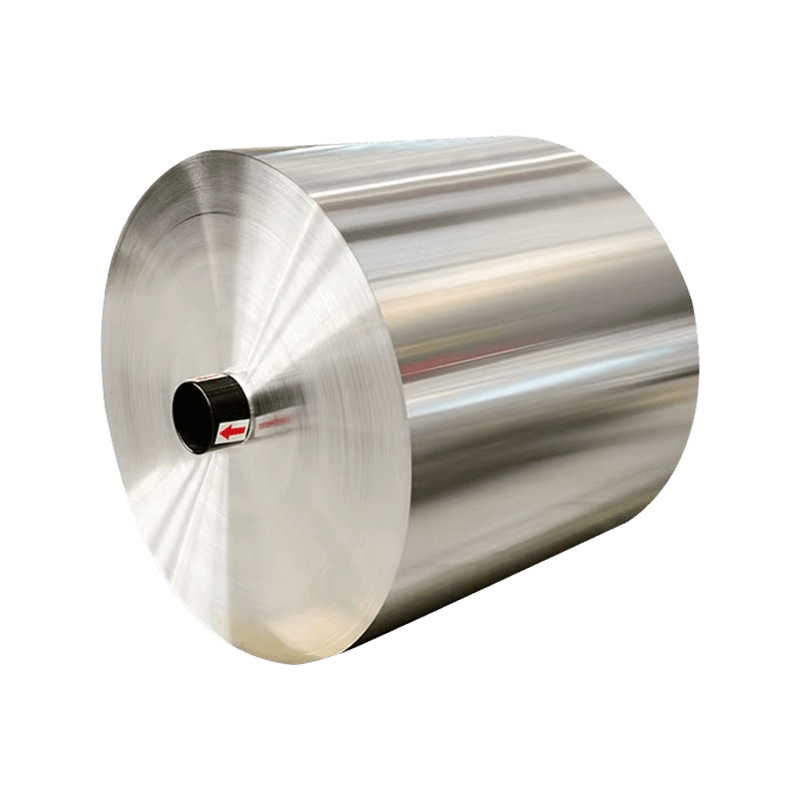
The 8011-O Ultra-Thin Aluminum Foil, Al-Fe-Si alloy contains a small amount of iron and silicon elem...
See Details -
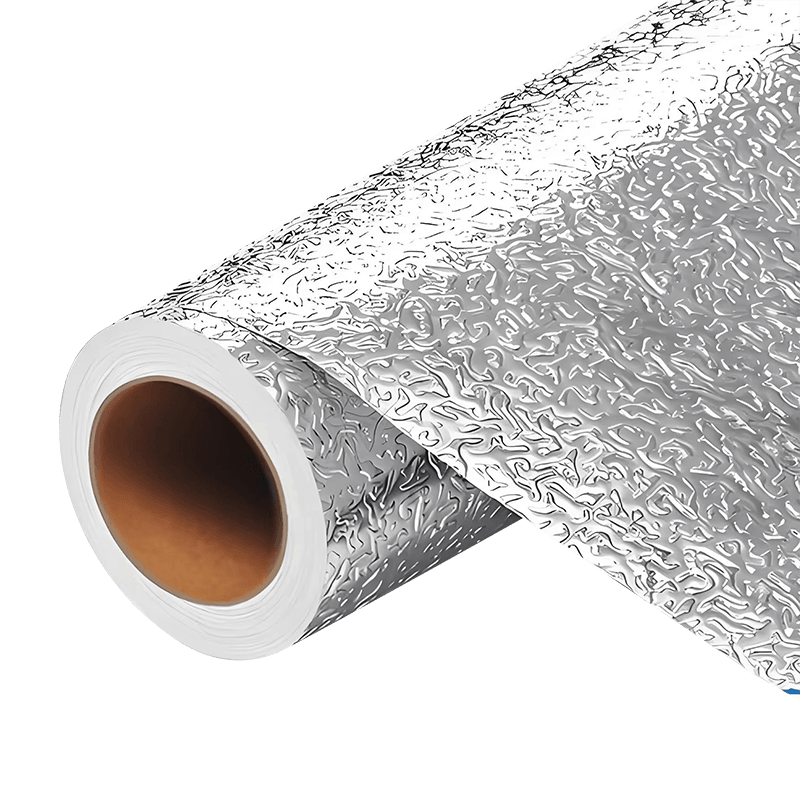
It is widely used in scenarios such as air filters, corrugated aluminum foil, phenolic board veneers...
See Details