English
 Español
 Português
AL/PE Woven Fabric is a high-performance composite material made by laminating premium aluminum foil...
See Details
Industry News
Home / News / Industry News / How to Achieve Heat-Sealing Performance in Aluminum-Plastic Composites: A Guide
How to Achieve Heat-Sealing Performance in Aluminum-Plastic Composites: A Guide
Date:Sep 07, 2026
Aluminum foil brings barrier properties to a composite, but it has no capacity to form a heat seal by itself. That capability always comes from something applied to the foil's surface, and manufacturers reach for one of three distinct techniques to put it there: laminating a separately made PE, EMAA, or EVA film onto the foil; extrusion-coating a molten PE layer directly onto the foil in a single continuous pass; or coating the foil with a hot-melt adhesive that only becomes active once heat and pressure are applied. Each route produces a composite that can be heat-sealed, but the equipment involved, the cost structure, and the failure modes differ enough that picking the wrong one shows up later — often as seals that pass an initial inspection and then fail somewhere in the shipping or installation cycle. This article looks at what separates the three approaches and where each one fits in flexible packaging, HVAC ducting, and cable or pipe insulation.
Method One: Laminating a Pre-Made PE, EMAA, or EVA Film
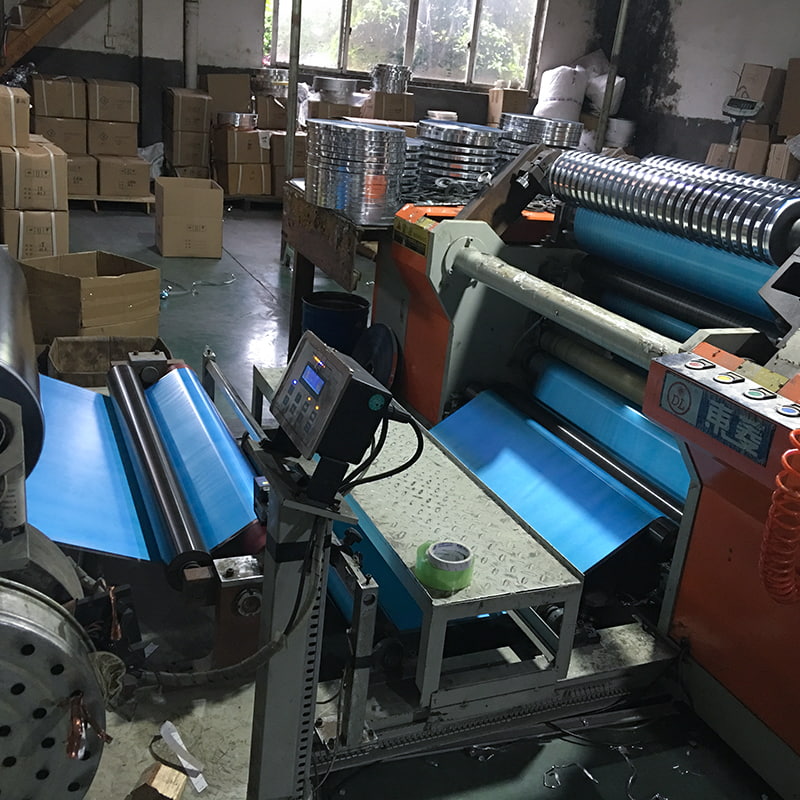
Dry lamination bonds the foil to a film that has already been extruded and wound as its own roll. An adhesive is applied to one web, the two webs are brought together under nip rollers, and the assembly passes through a curing stage before it is slit and rewound. Because the sealant layer starts life as an independent film with its own molecular orientation, it tends to resist flex-cracking and pinholing better than a layer applied straight onto the foil.
The film chosen for this route sets much of the composite's later performance:
- LDPE/LLDPE – lowest cost, adequate seal strength, the default choice for general-purpose packaging.
- EVA – tolerates repeated flexing well but softens at lower temperatures, so it suits applications that won't see much heat in service.
- EMAA – its ionic groups bond strongly to the aluminum oxide layer on the foil surface, giving a seal that resists chemical attack and holds up under rougher handling; this makes it the usual pick for pharmaceutical or other technical laminates where seal failure isn't an option.
Because the film and the adhesive tie layer are separate materials from the foil, lamination gives converters the widest choice of resin chemistry — if a project calls for a sealant the extrusion line can't run, laminating it on is often the only practical way to get there.
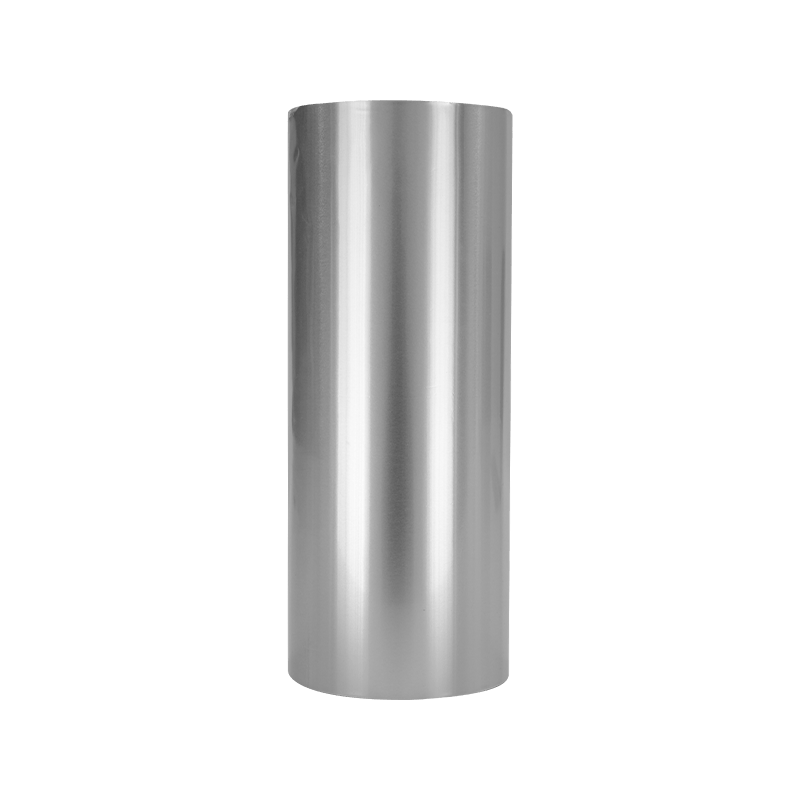 Aluminum-Polyethylene Laminate Film for Flexible PouchesThis flexible AL/PE laminate combines foil's barrier with PE's heat-sealability, making it ideal for liquid and soft product pouches. Its hanging packaging ensures smooth surfaces during transport.View Product →
Method Two: Extrusion Coating a PE Layer Directly onto the Foil
Extrusion coating skips the separate film entirely. Molten PE resin is pushed through a flat die and cast straight onto the moving foil web, where it cools and solidifies in-line. There's no adhesive tie layer and no pre-made film to source, which cuts a step out of the process and usually brings the cost per square meter down — a real advantage for high-volume, standard-grade packaging where the sealant doesn't need to survive extreme conditions.
The trade-off is that the PE applied this way hasn't been stretched or oriented the way a blown or cast film has, so it can be somewhat more prone to flex-cracking over repeated folding. Corona or flame treatment of the foil ahead of the die is usually needed to get adequate wetting, since molten PE doesn't bond to untreated foil as readily as a laminating adhesive does. Multilayer constructions such as PET/AL/PE are often built this way, with the PE side extrusion-coated directly and the PET ply added as reinforcement against tearing during the sealing step itself.
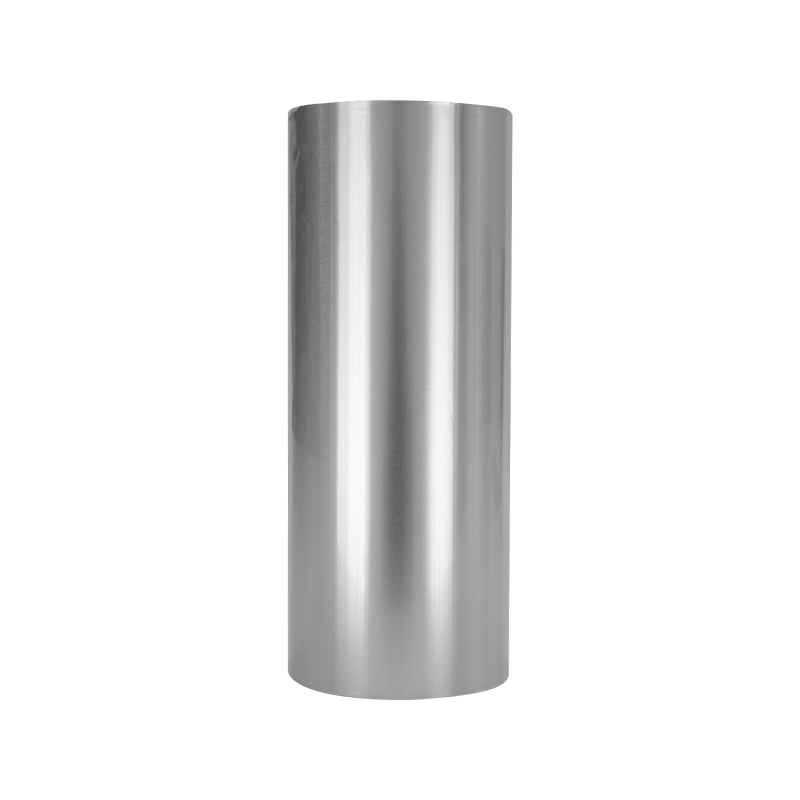 PET/Aluminum/PE Triplex Barrier FilmA three-layer laminate with PET for strength, aluminum for complete barrier, and PE for reliable heat sealing. Customizable thickness and width suit demanding industrial and insulation applications.View Product →
Method Three: Coating the Foil with a Hot-Melt Adhesive
The third route doesn't put down a continuous film at all — it applies a hot-melt adhesive as a coating, often EMAA-based or a modified polyolefin, in whatever coat weight the application calls for. Because the adhesive only activates once heat and pressure bring it above its softening point, the coated foil can sit in inventory and be sealed on demand later in a separate step.
This method earns its place where the foil needs to bond to something other than another sheet of foil or plastic — foam, metal, or an irregular substrate that a flat film wouldn't conform to well. Pipe insulation jacketing and cable wrapping are the clearest examples: the adhesive coating lets the aluminum composite grip a curved or textured surface in a way that a laminated film, designed mainly for foil-to-foil sealing, isn't built for.
 Aluminum/PET/EMAA Triplex Film with Strong AdhesionThis triplex integrates foil barrier, PET strength, and EMAA's exceptional bonding to foam, metal, and polymers. Suitable for pipe insulation, cable wrapping, and packaging structures.View Product →
Structure and Surface Quality Matter Regardless of Method
Whichever of the three routes is used, the foil itself still has to be flat and free of pinholes or creases — a weak spot in the foil undermines the seal no matter how the sealant got there. What changes between methods is where the weak points tend to show up. A laminated structure has a distinct adhesive layer that can be starved or unevenly spread; an extrusion-coated structure depends on how well the foil was treated just before the die; a hot-melt coating depends on tight control of coat weight, since it's typically thinner and less uniform than a full film. Cross-sectioning a sample under a microscope will usually tell you which of the three processes produced a given roll, just from how the layers meet.
Typical Process Parameters for Each Method
The three methods run at different temperatures and speeds because they're solving different problems — bonding a pre-made film, casting molten resin, or activating an adhesive coating. The ranges below are starting points; actual settings depend heavily on resin grade, foil gauge, and line configuration, so a trial run on production equipment is still the way to lock in final numbers.
| Method | Process Temperature (°C) | Nip/Roller Pressure (kg/cm²) | Line Speed (m/min) |
|---|---|---|---|
| Dry Lamination (PE/EMAA/EVA film) | 60–90 | 2–4 | 80–150 |
| Extrusion Coating (PE) | 280–320 | 3–6 | 100–250 |
| Hot-Melt Adhesive Coating | 130–180 | 1–3 | 50–120 |
Extrusion coating runs hottest because the PE has to be fully molten to flow evenly off the die, while hot-melt coating stays lower since the goal at this stage is only to apply the adhesive, not to seal anything yet. Lamination sits lowest of the three because the film is already formed — the heat here is just activating the adhesive between two solid webs.
Practical Considerations for Production
A few factors decide whether any of these three methods actually holds up at scale:
- Cleanliness – oil, dust, or residual moisture on the foil defeats wetting in all three processes, not just one.
- Surface treatment – corona or plasma treatment is often essential for extrusion coating and can help marginal lamination adhesion, but matters less for a hot-melt coating designed to bond mechanically.
- Storage – laminated rolls are fairly stable, but hot-melt coated rolls can block together if stacked while still warm or stored somewhere too hot.
- Testing – peel testing works for lamination and extrusion coating; for hot-melt coatings, coat-weight verification matters just as much as the peel result.
A good rule of thumb across all three methods: the composite should fail in the film or foam substrate before it fails at the seam. If it peels cleanly apart at the bond line, something in that particular process — adhesive starvation, melt temperature, or coat weight — needs adjusting.
Defects Specific to Each Method
- Delamination (lamination method) – usually an adhesive-starved bond or a curing stage that ran too fast or too cool.
- Orange peel or poor wet-out (extrusion coating) – melt temperature too low, or the die gap or air gap not set correctly for the line speed.
- Cold spots or gaps (hot-melt coating) – coat weight too thin, or an uneven applicator roll leaving bare patches on the foil.
- Pinholes (all three) – almost always traced back to creased or damaged foil rather than the sealant application itself.
Choosing the Right Method for the End Use
For pouches and technical laminates that need a specific resin chemistry — especially where EMAA's chemical resistance matters — film lamination is usually worth the extra cost. For high-volume, standard packaging or duct facings where price per square meter drives the decision, extrusion-coated PE is hard to beat. And for anything that has to bond to foam, metal, or an irregular surface rather than to another flat sheet — pipe insulation jacketing and cable wrapping being the clearest cases — a hot-melt adhesive coating is the method actually built for that job. Buyers evaluating a new application are usually better off starting with how the composite needs to bond, then working backward to the method, rather than picking a method first and hoping the end use fits.
Conclusion
There isn't one "correct" way to make an aluminum-plastic composite heat-sealable — there are three, and each solves a different problem. Laminating a separate PE, EMAA, or EVA film gives the widest resin choice and the best resistance to flexing. Extrusion coating trades some of that flexibility for lower cost and faster throughput on standard packaging. Hot-melt adhesive coating gives up the idea of a foil-to-foil seal altogether in exchange for the ability to bond aluminum composites to foam, metal, and other substrates a flat film can't handle. Matching the method to the actual bonding requirement — not just to whatever line happens to be available — is what keeps the seal the strongest part of the finished product rather than its weak point.
Content
- 1 Method One: Laminating a Pre-Made PE, EMAA, or EVA Film
- 2 Method Two: Extrusion Coating a PE Layer Directly onto the Foil
- 3 Method Three: Coating the Foil with a Hot-Melt Adhesive
- 4 Structure and Surface Quality Matter Regardless of Method
- 5 Typical Process Parameters for Each Method
- 6 Practical Considerations for Production
- 7 Defects Specific to Each Method
- 8 Choosing the Right Method for the End Use
- 9 Conclusion
Recommended Articles
Related products
-
-
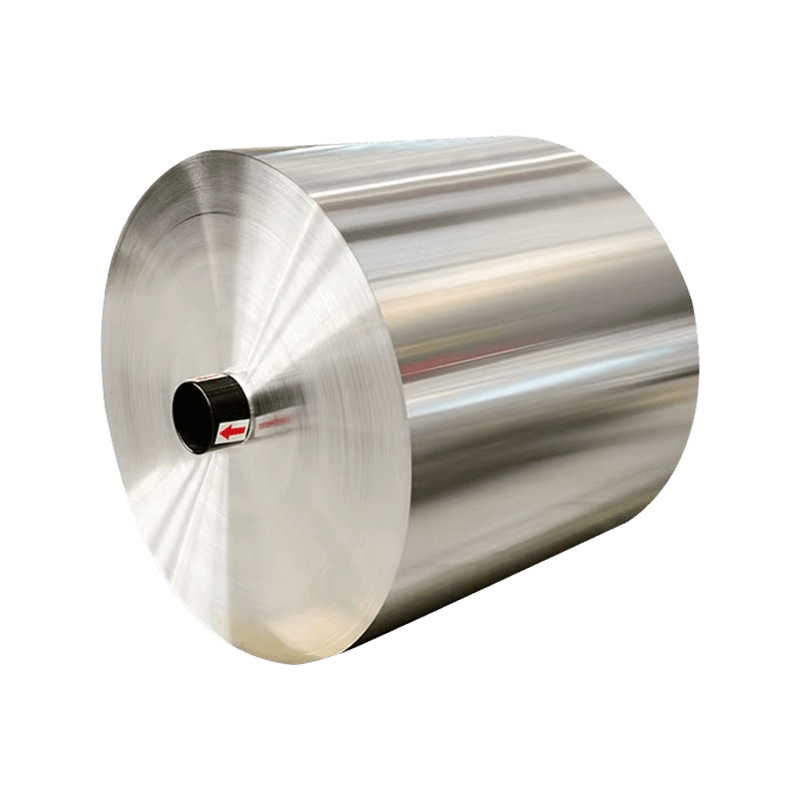
The 8011-O Ultra-Thin Aluminum Foil, Al-Fe-Si alloy contains a small amount of iron and silicon elem...
See Details -
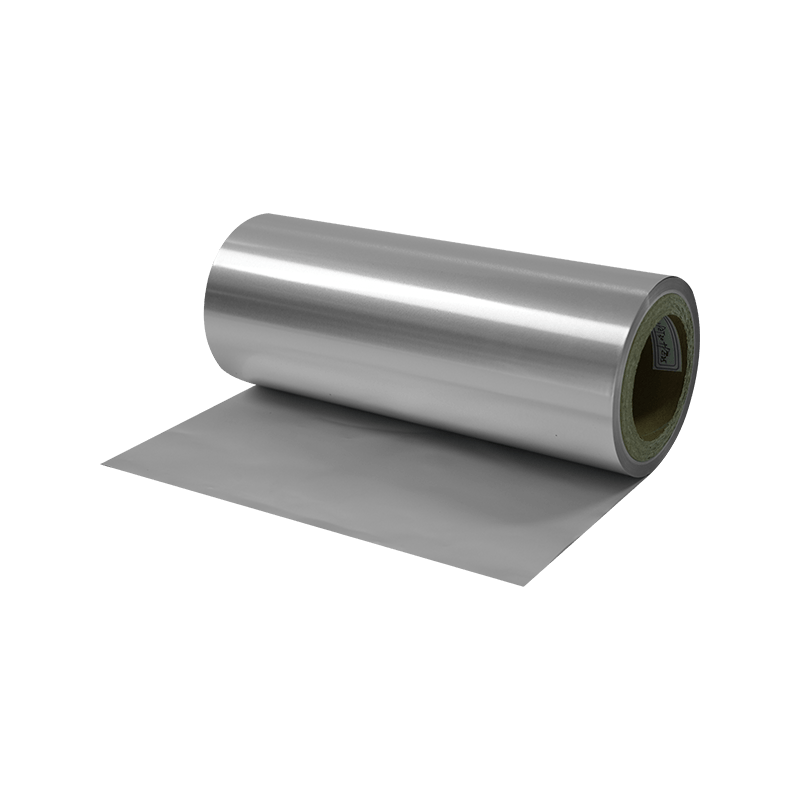
AL/PET Laminate Film is a high-performance composite film combining the metallic barrier of aluminum...
See Details -
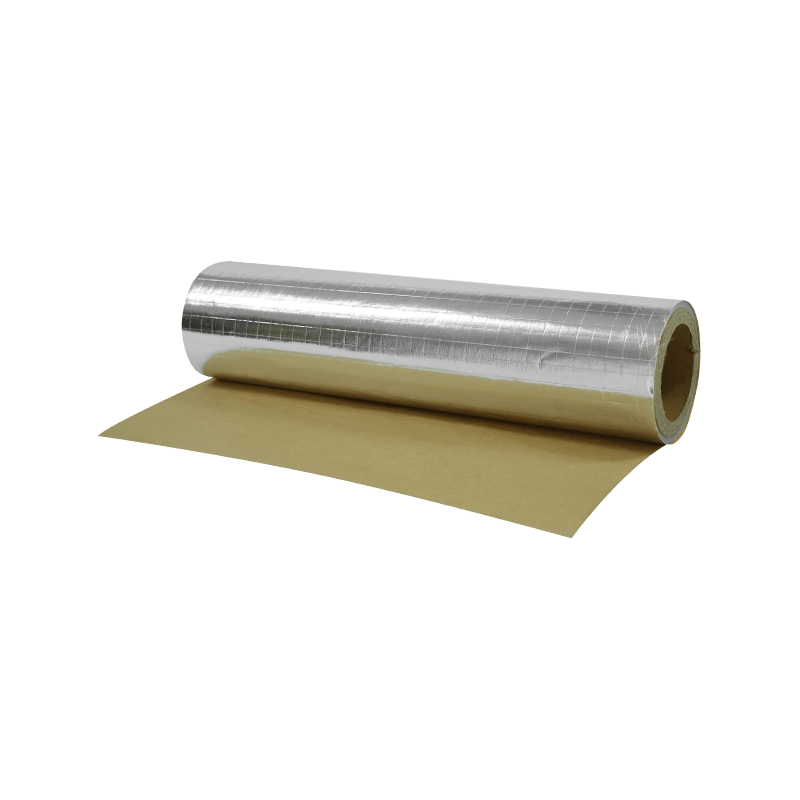
FSK: This product adopts a composite structure of aluminum foil and kraft paper, and by using scrim,...
See Details -
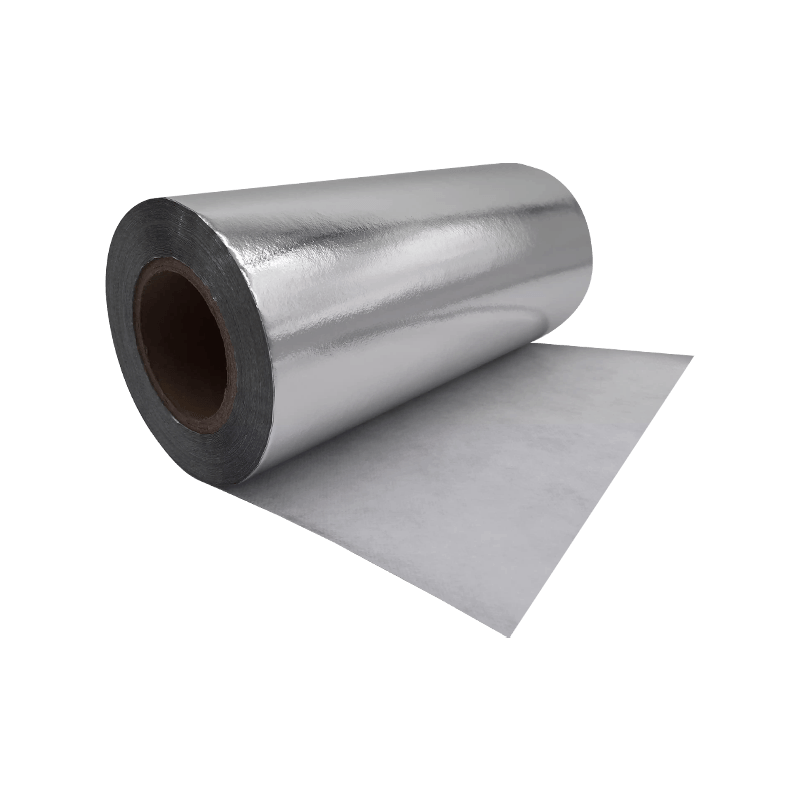
AL/Non-Woven Fabric Laminate Film is a cost-effective composite material that integrates the barrier...
See Details -
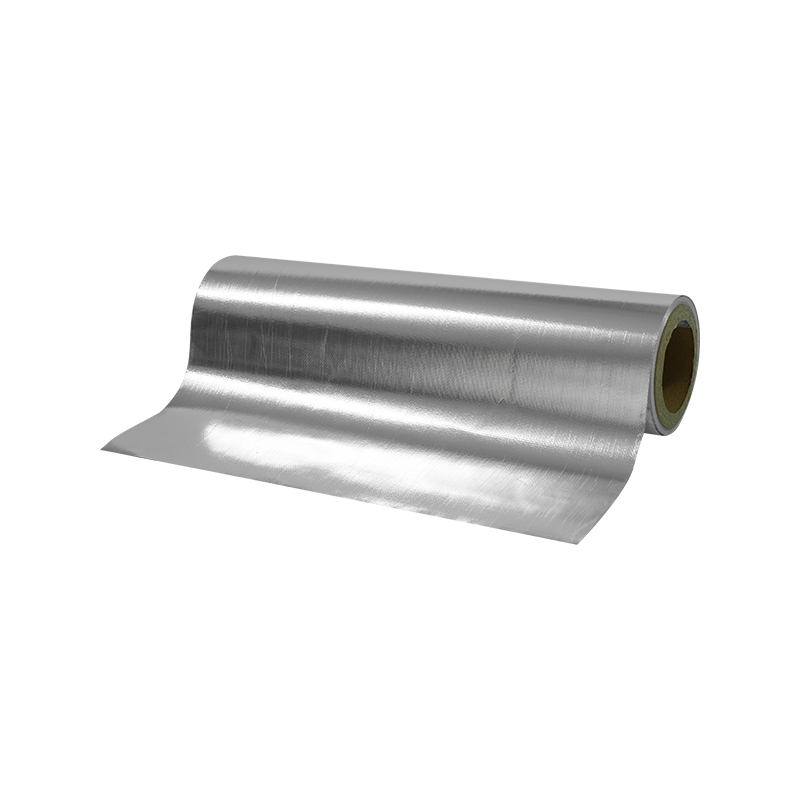
AL/Fiberglass Fabric laminate Film is a film with very high cost performance, especially its excelle...
See Details