English
 Español
 Português
AL/PE Woven Fabric is a high-performance composite material made by laminating premium aluminum foil...
See Details
Industry News
What Makes Aluminum Foil So Essential in Modern Packaging?
Date:Apr 22, 2026
What Is Aluminum Foil and How Is It Made?
Aluminum foil is a thin sheet of aluminum metal produced by rolling aluminum slabs through a series of progressively tighter rolling mills until the desired thickness is achieved. Commercial packaging foil typically ranges from 6 to 200 microns in thickness, with the most commonly used gauges for laminate packaging falling between 7 and 9 microns. At these ultra-thin gauges, the foil retains its metallic barrier properties while remaining flexible enough to be laminated, formed, and sealed on high-speed packaging lines.
The production process begins with aluminum ingots that are cast and hot-rolled into thick coils, then cold-rolled through multiple passes to reduce thickness. During the final rolling stages, two sheets are often rolled together simultaneously — a process called double rolling — which is why one side of household and industrial foil typically has a matte finish (the side that faced the other sheet) and one side has a bright, reflective finish. This difference in surface appearance has no significant impact on barrier performance, though it is frequently misunderstood as indicating a functional difference between the two sides.
The Barrier Properties That Define Aluminum Foil's Value
The core reason aluminum foil is used in packaging — and why it commands a premium over polymer-based alternatives — is its absolute barrier performance across every critical transmission category. Unlike barrier coatings or metallized films that offer partial protection, solid aluminum foil at 7 microns or above achieves near-zero permeability to oxygen, moisture, light, and aroma compounds simultaneously.
| Barrier Property | Aluminum Foil (7–9 µm) | Metallized PET | EVOH Film | Standard PE Film |
| Oxygen (OTR) | ~0 cc/m²/day | 0.5–2 cc/m²/day | 0.1–1 cc/m²/day | 2,000+ cc/m²/day |
| Moisture (WVTR) | ~0 g/m²/day | 0.1–0.5 g/m²/day | 0.5–2 g/m²/day | 5–15 g/m²/day |
| Light Barrier | Complete (100%) | Partial (90–95%) | None | None |
| Aroma Barrier | Excellent | Good | Good | Poor |
This multi-dimensional barrier superiority is what makes aluminum foil irreplaceable in high-sensitivity packaging categories. Products such as roasted coffee, infant formula, pharmaceutical tablets, and ready-to-eat meals all depend on the foil layer to maintain product quality from manufacturing through the end of their stated shelf life — which can range from 12 to 36 months depending on the product and storage conditions.
Aluminum Foil Grades and Alloy Specifications
Not all aluminum foil is produced to the same specification. The alloy composition, temper, and surface treatment of the foil determine its mechanical properties, formability, and suitability for specific packaging applications. Understanding these distinctions is important when sourcing foil for lamination, lidding, blister packaging, or household use.
Common Alloy Series Used in Packaging Foil
The 1000 and 8000 series aluminum alloys are the most widely used in packaging foil production. Alloy 1235 (99.35% minimum aluminum purity) is the benchmark for flexible packaging laminates due to its excellent rollability, low pinhole frequency, and consistent surface quality. Alloy 8011 and 8079 are increasingly used for pharmaceutical blister packaging and household foil because they offer improved elongation and formability — critical properties when foil must be dead-folded or deep-drawn without cracking.
Temper Designations and Their Practical Meaning
Aluminum foil temper refers to the degree of work hardening applied during rolling. The O temper (fully annealed) is soft and highly formable — ideal for household cooking foil, wrapping, and blister pack forming where the foil must conform to a mold cavity without tearing. H18 temper (fully work-hardened) is rigid and springy, used in technical applications where shape retention is important. H22 and H24 tempers represent intermediate states that balance formability with sufficient stiffness for lamination processing without excessive stretching on the lamination line.
Primary Packaging Applications of Aluminum Foil
Aluminum foil appears in an exceptionally broad range of packaging formats across consumer, industrial, pharmaceutical, and food service markets. Its ability to be laminated, formed, printed, embossed, and sealed makes it one of the most versatile barrier substrates available to packaging engineers.
Flexible Laminate Pouches and Sachets
The largest volume use of packaging-grade aluminum foil is as the middle barrier layer in multi-layer laminate structures such as PET/AL/PE, PET/AL/CPP, and BOPP/AL/PE. These laminates are converted into stand-up pouches, flat sachets, pillow packs, and form-fill-seal packaging for products including coffee, tea, powdered infant formula, spices, dried soups, and nutritional supplements. The foil layer within these constructions provides the absolute oxygen and moisture barrier that gives these products shelf lives measured in months or years rather than days or weeks.
Pharmaceutical Blister Packaging
In pharmaceutical packaging, aluminum foil is used as the lidding material in blister packs, where it is heat-sealed over thermoformed PVC, PVDC, or PP cavities containing tablets or capsules. Cold-form foil blister packaging — where the foil itself is deep-drawn to form the cavity using alloy 8021 O-temper foil — provides the highest level of drug protection available in solid-dose packaging. Regulatory agencies including the FDA and European Medicines Agency (EMA) require validated barrier performance for moisture-sensitive and oxygen-sensitive drug products, and aluminum foil-based blister systems are the standard compliance solution.
Lidding Foils for Trays and Cups
Heat-seal lidding foils laminated with PE, PP, or peelable sealant coatings are used to seal aluminum trays, plastic trays, glass jars, and dairy cups. Yogurt lids, butter wrap, margarine lidding, and ready-meal tray seals all rely on aluminum foil lidding constructions. The foil provides the necessary barrier while the sealant layer ensures a consistent, hermetic bond to the container flange. Peelable sealant formulations are specified for consumer convenience applications where the user needs to open the package cleanly without tools.
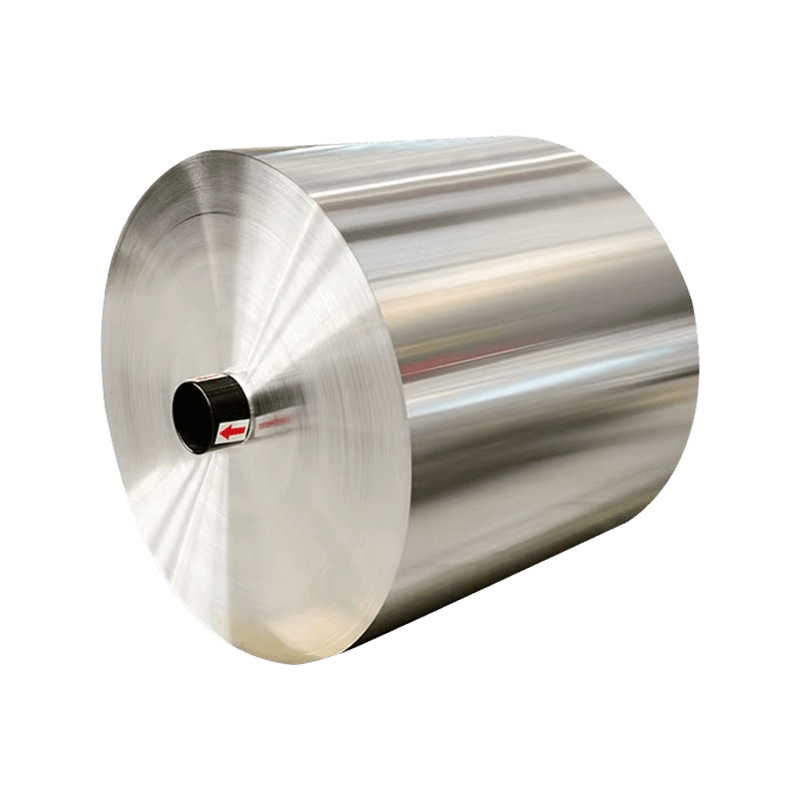
Household and Food Service Foil
Consumer household foil — typically 10–20 microns of 8011-O alloy — is used for wrapping, covering, cooking, grilling, and freezer storage of foods. Food service and catering operations use heavier gauges (20–40 microns) for containers, trays, and semi-rigid packaging where the foil must hold its shape under the weight of food contents. These applications account for a significant portion of global aluminum foil consumption and represent the product form most familiar to end consumers, even though industrial lamination represents the higher total tonnage use category.
Key Quality Parameters When Sourcing Aluminum Foil
For industrial buyers sourcing aluminum foil for lamination or converting, evaluating quality beyond basic thickness and alloy specification is essential. The following parameters directly affect lamination quality, barrier integrity, and production line performance.
- Pinhole count: Pinholes in the foil are microscopic perforations that compromise barrier performance. Industry standards specify maximum allowable pinhole counts per square meter — typically fewer than 1 pinhole per m² for 7-micron foil and zero for 9-micron foil in pharmaceutical applications. Always request pinhole test reports from suppliers.
- Surface wettability: The foil surface must have adequate surface energy (typically above 32 dynes/cm) to achieve proper adhesion with lamination adhesives and inks. Request dyne test certification and verify that surface treatment is consistent across the full roll width.
- Thickness uniformity: Gauge variation across the roll width or along the roll length causes tension irregularities during lamination and printing. Specify maximum thickness tolerance bands — typically ±6% for packaging grades — and request gauge profile data from the mill.
- Oil residue level: Rolling lubricants remaining on the foil surface after production can interfere with adhesive bonding. Specify maximum residual oil levels (typically below 5 mg/m²) and confirm the foil supplier's degreasing process meets your lamination adhesive system requirements.
- Food-contact compliance: For direct or indirect food-contact applications, require compliance documentation against EU Regulation 1935/2004, FDA 21 CFR 177, and where applicable, specific national regulations. Pharmaceutical foil must additionally comply with pharmacopoeia standards and ICH Q1A stability requirements.
- Roll geometry and core specifications: Inconsistent roll width, telescoping, or incorrect core inside diameter causes misfeeds, web breaks, and downtime on lamination and converting lines. Specify core diameter, roll weight limits, and wind tension to match your equipment.
Sustainability and Recycling of Aluminum Foil Packaging
Aluminum is one of the most recyclable materials in existence — it can be recycled indefinitely without loss of quality, and recycling aluminum requires only about 5% of the energy needed to produce primary aluminum from bauxite ore. This intrinsic recyclability makes aluminum foil one of the more environmentally defensible packaging materials when it is collected and recycled effectively.
The primary challenge with aluminum foil recycling lies not in the material itself but in the collection infrastructure and format complexity. Pure aluminum household foil is widely accepted in curbside recycling programs in many countries, provided it is clean and free of food contamination. However, aluminum foil laminated with polymer films — as in PET/AL/PE structures — cannot be processed in standard aluminum recycling streams because the polymer layers contaminate the melt. These multi-material structures require either chemical recycling, pyrolysis energy recovery, or specialized industrial collection programs to divert them from landfill.
Several industry initiatives are advancing closed-loop solutions for foil laminate waste, and some packaging converters now offer post-industrial foil laminate recycling programs as part of their sustainability services. For brands evaluating aluminum foil packaging, a balanced lifecycle assessment — one that accounts for the shelf life extension benefits, reduction in food waste, and downstream recycling potential — typically presents a more accurate environmental picture than a single-metric recyclability comparison against polymer alternatives.
Practical Storage and Handling Guidelines for Industrial Foil Rolls
Maintaining the quality of aluminum foil rolls from delivery through production use requires following consistent storage and handling practices. Foil is a dimensionally precise, surface-sensitive material that can be damaged by environmental exposure, mechanical stress, or improper storage conditions.
- Temperature and humidity control: Store foil rolls at 15–25°C and relative humidity below 60%. High humidity promotes surface oxidation and white rust formation on the foil surface, which reduces adhesive bond strength during lamination.
- Condensation prevention: Never move foil rolls directly from a cold warehouse to a warm production area without allowing adequate acclimatization time. Temperature differentials cause condensation on the foil surface, which causes lamination adhesion failures and corrosion spots.
- Vertical storage: Store rolls upright on their cores, never horizontally stacked, to prevent edge damage and roll deformation that causes web-tracking problems on production lines.
- Protective wrapping: Keep foil rolls in their original moisture-barrier wrapping until immediately before use. Re-wrap partially used rolls if production is interrupted for more than a few hours in humid environments.
- FIFO inventory management: Implement strict first-in, first-out rotation to ensure foil is used within the supplier's recommended shelf life, typically 12–18 months from production date, before surface quality or adhesion properties deteriorate.
Content
- 1 What Is Aluminum Foil and How Is It Made?
- 2 The Barrier Properties That Define Aluminum Foil's Value
- 3 Aluminum Foil Grades and Alloy Specifications
- 4 Primary Packaging Applications of Aluminum Foil
- 5 Key Quality Parameters When Sourcing Aluminum Foil
- 6 Sustainability and Recycling of Aluminum Foil Packaging
- 7 Practical Storage and Handling Guidelines for Industrial Foil Rolls
Recommended Articles
Related products
-
-

The 8011-O Ultra-Thin Aluminum Foil, Al-Fe-Si alloy contains a small amount of iron and silicon elem...
See Details -
It is widely used in scenarios such as air filters, corrugated aluminum foil, phenolic board veneers...
See Details -
Aluminum strips are usually around 0.09-0.2mm in thickness, featuring better plasticity and electric...
See Details -
PET Shrink Film is renowned for its exceptional transparency, high tensile strength and recyclabilit...
See Details -
Reinforced PVC Mesh Fabric Film is a composite material made by laminating PVC film with a high-stre...
See Details